How to Evaluate a Reliable DC EV Charging Station Manufacturer
Aug 28, 2026
Supplier Qualification
How to Evaluate a Reliable DC EV Charging Station Manufacturer
A reliable DC EV charging station manufacturer should be able to prove that the proposed charger fits the vehicle, electrical supply, destination market and backend platform. Buyers should evaluate documented engineering and delivery controls rather than relying on catalogue claims or the lowest unit price.
Begin with the exact charger configuration. Check the output envelope, connector standard, protection design, environmental rating, protocol functions, applicable certification and test records. Then determine who will provide commissioning, firmware support, spare parts and technical diagnosis after installation.
Start with the Application
A Reliable Manufacturer Asks Technical Questions Before Recommending a Charger
The same power rating can describe chargers built for very different vehicles, electrical systems and operating environments. A supplier that recommends a model without checking the project inputs may overlook a fundamental compatibility issue.
- Destination country and required charging interface
- Target vehicle battery-voltage and current ranges
- Available AC supply, transformer capacity and grounding system
- Number of charging bays and expected simultaneous use
- Indoor or outdoor conditions and temperature range
- Backend, OCPP, authorization and payment requirements
- Local certification and inspection requirements
- Expected commissioning and after-sales responsibilities
Manufacturer Evidence
Eight Areas That Separate a Verifiable Supplier from a Sales Listing
Engineering Capability
The supplier should explain the power architecture, charging control, protection logic, thermal design and configuration limits of the proposed model.
Configuration Control
Drawings, bills of materials, firmware versions and parameter settings should correspond to the approved order rather than changing without review.
Component Traceability
Critical components such as power modules, controllers, contactors, meters and connectors should be identifiable for quality investigation and replacement.
Production Testing
The manufacturer should define which electrical, communication, protection and charging tests are completed before shipment.
Compliance Management
Certificates and test reports should match the product designation, standards, destination market and organization named on the documents.
Backend Integration
Protocol claims should be supported by a function matrix and testing with the buyer's intended charging management system.
Delivery Documentation
The shipment should include the agreed manuals, wiring information, configuration records, test documents and packing identification.
Lifecycle Support
Warranty handling, remote diagnosis, firmware updates, spare parts and technician responsibilities should be defined before purchase.
Project Communication
Commercial and technical contacts should use controlled specifications and record changes made during approval, production and commissioning.
Technical Specification Review
Verify the Complete Output Envelope, Not Only Rated Kilowatts
Rated power alone does not show whether a charger can deliver the required output to a particular vehicle. Voltage, maximum current and the charger's power curve must be reviewed together.
| Specification | Evidence to Request | Why It Matters | Warning Sign |
|---|---|---|---|
| Rated output power | Model-specific datasheet and test condition | Shows the intended cabinet rating under defined conditions | One rating is used for several models without configuration detail. |
| DC voltage range | Minimum and maximum operating voltage | Determines compatibility with different battery platforms | The supplier checks connector shape but not vehicle voltage. |
| Maximum output current | Cabinet and connector current limits | A low current limit may prevent full rated power at lower voltage | Current is absent from the technical quotation. |
| Dual-connector allocation | Single- and simultaneous-session power logic | Two connectors may share the cabinet's total output | The quotation suggests both connectors always deliver full cabinet power. |
| AC input requirement | Voltage, frequency, phase, grounding and maximum input | The site distribution system must support the charger | The manufacturer assumes the same input worldwide. |
| Operating temperature | Full-output range and any derating curve | High ambient temperature may reduce available output | A temperature range is quoted without explaining derating. |
The quotation, drawing, datasheet, production order and final inspection should identify the same power rating, connector configuration, input supply, output limits and optional functions.
Internal Architecture
Ask How the Charger Manages Power Conversion, Heat and Protection
Commercial DC chargers operate for repeated high-power sessions, often in outdoor environments. Component names alone do not establish reliability. Buyers need to understand how components are applied, cooled, protected and replaced.
- Power-module rating and module-level redundancy strategy
- Airflow path, fan access, filters and thermal monitoring
- AC and DC switching and protective-device coordination
- Insulation monitoring and emergency-stop response
- Surge-protection arrangement and grounding requirements
- Connector temperature monitoring where included
- Separation of power, control and communication wiring
- Front or rear access required for routine service
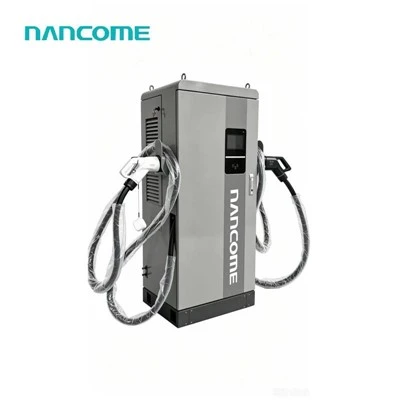
Outdoor suitability also depends on installation, drainage, direct sunlight, condensation, temperature, altitude, dust, salt exposure and maintenance practices.
Standards and Certificates
Check the Scope and Identity of Every Compliance Document
A certificate logo in a brochure is not enough. The buyer should determine what was tested, which model and firmware were covered, who owns the document and whether the evidence is accepted in the destination market.
| Document Check | Acceptable Evidence | Risk to Identify |
|---|---|---|
| Applicant and manufacturer | Names and addresses can be linked to the supplier and production site | A third party's certificate is presented without authorization. |
| Product designation | The ordered model is listed or covered by a documented product family | Evidence applies only to a different charger. |
| Standard and edition | The required standard, edition and tested clauses are stated | A general component report is presented as charger certification. |
| Laboratory and report number | Issuer identity and report reference can be verified | Only an edited certificate image is supplied. |
| Configuration scope | Power, connector, hardware and software variants are identified | Major changes have been made since the tested configuration. |
| Destination acceptance | Importer, authority or certification body confirms applicability | A valid report is not sufficient for local market approval. |
Safety, EMC, grid connection, metering, payment, accessibility and installation requirements can differ between countries and projects.
OCPP and Software
"OCPP Supported" Must Be Converted into a Testable Function List
OCPP creates a communication framework between a charging station and a charging station management system. A version statement does not confirm every optional function or interoperability with the buyer's backend.
| Function to Confirm | Procurement Question | Suggested Verification |
|---|---|---|
| Charger registration | Can the charger connect securely to the selected CSMS? | Connect the production-equivalent charger to a test account. |
| Status reporting | Are cabinet and connector states mapped correctly? | Compare physical charger states with backend states. |
| Authorization | Which RFID, application or local-list workflows are supported? | Test valid, invalid and offline authorization conditions. |
| Transaction records | Are start, stop, meter and termination data transmitted correctly? | Compare the charger display, internal log and CSMS record. |
| Remote commands | Which start, stop, reset and configuration actions are permitted? | Test each approved command and record its response. |
| Connection loss | How does the charger operate while the backend is unavailable? | Interrupt and restore communication during commissioning. |
| Firmware management | Who authorizes updates and how is failure recovered? | Review the update procedure, version record and rollback route. |
Verify the exact certified product, software version and profiles in the Open Charge Alliance records. Certification should not be treated as a guarantee covering unrelated charger quality or site performance.
Factory Acceptance
Define the FAT Before Production Is Complete
A factory acceptance test gives the buyer an agreed method for checking the actual production configuration before shipment. The test scope should be practical, measurable and recorded against the charger serial number.
- Confirm model, serial number and nameplate information.
- Inspect cabinet, connector, cable and internal wiring.
- Compare installed components with the approved configuration.
- Check AC input and protective-earth connections.
- Verify insulation and protection test records.
- Start charging with a suitable vehicle or simulator.
- Record output voltage, current and power behavior.
- Test both connectors and their power-allocation logic.
- Operate emergency stop and selected fault protections.
- Check RFID or other specified authorization methods.
- Connect to the intended backend where practical.
- Confirm language, branding and interface configuration.
- Review alarms, logs and remote status reporting.
- Check manuals, drawings and packing contents.
Agree whether tests apply to one unit, every unit or a defined sampling plan. Record deviations and corrective actions before approving shipment.
After-Sales Capability
Reliability Includes the Ability to Restore Service
Even correctly manufactured charging equipment requires preventive maintenance and may eventually need parts or technical diagnosis. The commercial agreement should explain how support works after the charger reaches the destination.
| Support Area | Questions for the Manufacturer | Required Project Decision |
|---|---|---|
| Commissioning | Is support remote, on-site or provided through a local partner? | Assign responsibility for electrical, charger and backend commissioning. |
| Technical diagnosis | Which logs, measurements and fault data can be reviewed? | Define the evidence required before a part is replaced. |
| Spare parts | Which parts should be held locally and what are their lead times? | Approve an initial spare-parts package for the installed fleet. |
| Warranty | When does coverage begin and what costs are excluded? | Clarify parts, labor, transport and technician expenses. |
| Firmware | How are releases tested, approved and installed? | Control versions and prevent unapproved field changes. |
| Training | What can local operators and technicians safely perform? | Separate operator checks from qualified electrical work. |
Supplier Comparison
Use the Same Evidence-Based Scorecard for Every Bidder
| Evaluation Area | Strong Supplier Evidence | Procurement Warning |
|---|---|---|
| Product recommendation | Based on vehicles, site input and operating demand | A model is proposed from power and price alone. |
| Specifications | Consistent, model-specific and revision-controlled | Datasheets contain conflicting values. |
| Compliance | Complete documents with verifiable scope | Only logos or cropped certificate images are supplied. |
| OCPP | Version, profiles, functions and test plan are defined | The quotation says only "OCPP supported." |
| Production testing | Test scope, equipment and records are explained | No serial-number-linked test evidence is available. |
| Changes | Buyer approval is required for material changes | Components may be substituted without notice. |
| After-sales support | Contacts, response process and parts responsibilities are defined | Support is described only as "24/7 service." |
| Price | Scope and exclusions can be compared line by line | A low price excludes necessary functions or services. |
RFQ Preparation
Information to Send Before Requesting a Final Quotation
- Destination country and project location
- Target vehicle makes, models or charging limits
- Required charger power and quantity
- Connector type and number of charging outlets
- Available AC voltage, frequency and site capacity
- Indoor or outdoor installation conditions
- Ambient temperature, altitude and special exposure
- Selected CSMS and required OCPP version
- Authorization, payment and metering requirements
- Applicable certifications and local regulations
- Branding, language and other OEM requirements
- Commissioning, training and spare-parts scope
Separate charger hardware, optional functions, certification, packaging, transport, commissioning, backend integration, training and spare parts so bids can be compared accurately.
Project Configuration
Evaluate Our DC Charging Platform Against Your Project Requirements
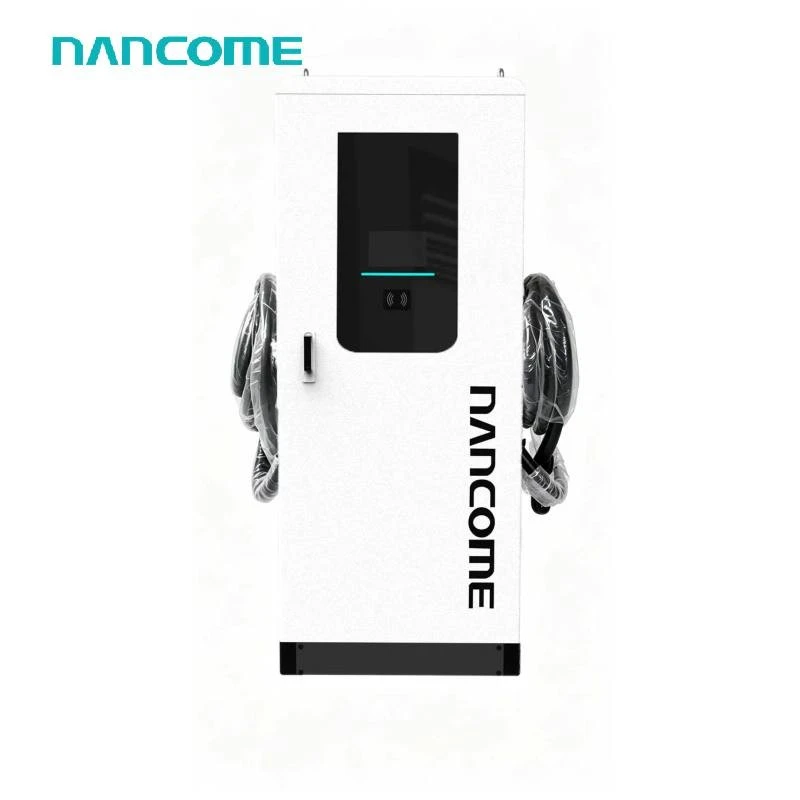
Our NEDF floor-mounted platform includes selectable 40–240kW configurations, DC200–1000V output, two standard connectors and an IP54 enclosure. Connector, communication and OEM options are confirmed against the destination market and ordered configuration.
Commercial DC Charging
Review the operating requirements for a commercial DC EV charging station.
CCS2 Configuration
Check vehicle voltage and destination requirements for a CCS2 DC charger.
CCS1 Configuration
Compare current, voltage and backend requirements for a CCS1 DC charger.
Two Charging Outlets
Confirm simultaneous-session behavior for a dual-connector DC fast charger.
OCPP Integration
Define backend functions for an OCPP DC EV charger.
Outdoor Installation
Review the environmental limits of an outdoor DC EV charger.
Buyer Questions
DC EV Charging Station Manufacturer FAQ
Check whether the manufacturer can match the charger's voltage, current, connector, input supply and communication functions to the target vehicles and installation site. General manufacturing claims do not correct an unsuitable configuration.
Verify the applicant, manufacturer, model, standard, laboratory, report number and covered configuration. Where possible, confirm the document through the issuing organization and ask the local authority whether it satisfies market-entry requirements.
No. Confirm the OCPP version, implemented profiles, security requirements and mandatory functions. The charger should be tested with the intended backend using the final or production-equivalent firmware.
The FAT should cover product identity, visual inspection, approved components, electrical safety records, charging operation, output behavior, connector allocation, protection functions, authorization, backend communication and delivery documents.
Power equals voltage multiplied by current. A charger may reach its rated power only at higher output voltage if its current is limited. Compare the output envelope with the target vehicle rather than comparing kilowatts alone.
No. Confirm whether each price includes the same connectors, components, protocol functions, certification, packaging, documentation, warranty, commissioning support and spare parts. A lower quotation may represent a different scope.
Send the destination country, vehicle information, charger quantity, power range, connector standards, electrical supply, environmental conditions, backend, OCPP functions, certification requirements, commissioning scope and OEM needs.
Send Us the Technical Scope, Not Only the Required Kilowatts
Provide your destination country, vehicles, charging schedule, site power supply, connector standards, charger quantity, backend requirements and certification needs. We can prepare a configuration for technical comparison and project review.
Request a DC Charger Configuration