

Vehicle Inlet
Confirm that every target vehicle has a CCS1 inlet rather than CCS2, GB/T, CHAdeMO or another interface.
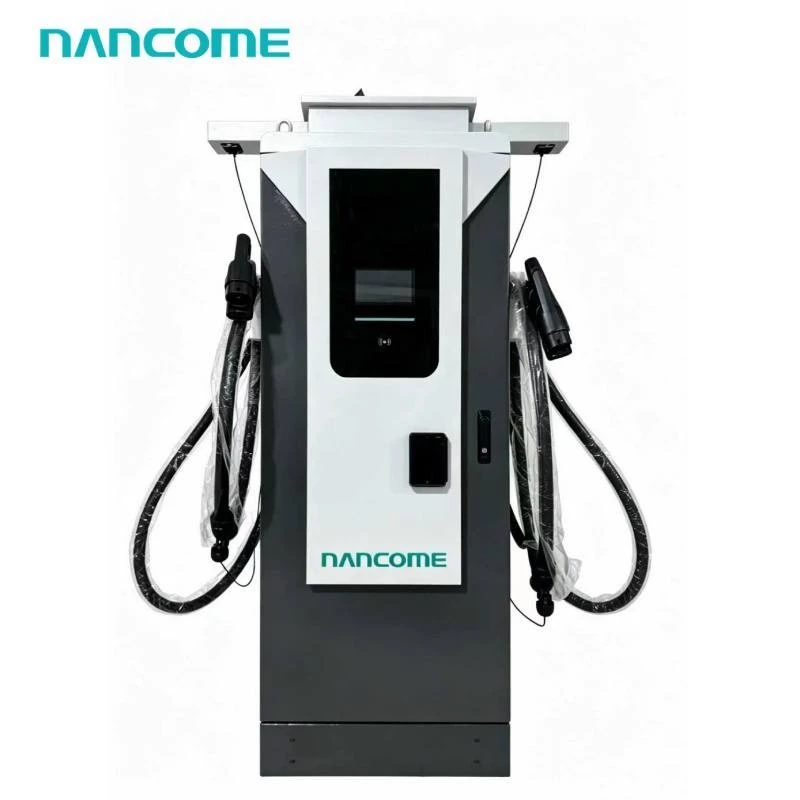
CCS1 connector configuration for compatible North American electric vehicles
Available in 40kW to 240kW commercial floor-mounted configurations
DC200–1000V output covers different passenger and commercial EV platforms
Single, dual and mixed-connector arrangements available by project
Optional OCPP supports charging-network monitoring and backend integration
Five-meter air-cooled cable supplied as standard with optional upgrades
IP54 cabinet supports indoor and outdoor commercial charging locations
A CCS1 DC Charger delivers regulated DC power through a CCS1 connector to compatible electric vehicles. It is primarily selected for charging projects serving CCS1-equipped vehicles in North American and other applicable markets.
NEWCOM's commercial floor-mounted platform can be configured from 40kW to 240kW with a DC200–1000V output range. Charger selection must also account for vehicle voltage, accepted current, site electrical capacity, connector quantity and backend requirements.
Confirm these four items before approving the charger model.
The connector standard identifies the physical and vehicle communication interface. It does not determine site input power, charging speed, cable reach or network compatibility.
Confirm that every target vehicle has a CCS1 inlet rather than CCS2, GB/T, CHAdeMO or another interface.
List the minimum and maximum vehicle battery voltages that the charging station must serve.
Use vehicle charging curves and maximum accepted DC power to avoid oversizing the charger without operational benefit.
Confirm transformer capacity, incoming voltage and other site loads before selecting the rated output.
Define connector quantity, bay positions, cable routing and the number of simultaneous charging sessions.
State the required OCPP version, connection method, user access and charging-management platform.
CCS1 can be specified as the charging interface for the NEDF floor-mounted platform. Final current, connector count and power-sharing logic depend on the ordered model.
| Category | Item | Available Specification |
|---|---|---|
| AC input | Voltage range | AC380V ±20% |
| AC input | Connection | 3P + N + PE |
| AC input | Operating frequency | 45–65Hz |
| Electrical | Power factor | ≥0.95 under normal output power |
| DC output | Rated-power options | 40 / 60 / 80 / 120 / 160 / 180 / 240kW |
| DC output | Voltage range | DC200–1000V |
| DC output | Series output current | 0–300A; final limit depends on the selected configuration |
| Interface | Charging connector | CCS1 configuration |
| Interface | Connector arrangement | Single, dual or project-specific multi-connector configuration |
| Cable | Standard length | 5m; optional length upgrade available |
| Cooling | Cable cooling | Air cooling as standard; liquid cooling optional |
| Environment | Operating temperature | -20°C to 50°C |
| Environment | Storage temperature | -40°C to 85°C |
| Environment | Humidity | 5–90% RH, non-condensing |
| Environment | Altitude | ≤2000m |
| Installation | Cabinet type | Floor-mounted; indoor or outdoor use |
| Enclosure | Protection level | IP54 |
| Management | Communication | Remote operation and service; OCPP optional |
| Customization | Project support | OEM, ODM and project-specific configuration available |
The quotation should identify rated power, output-current limit, CCS1 cable assembly, connector quantity, simultaneous output, communication method and any destination-market requirements.
Actual charging power changes throughout a session. It is limited by the vehicle's request, battery state, temperature, charger output and cable capacity.
Match charger power to peak-hour vehicle arrivals, expected dwell time and the vehicle mix using CCS1.
Use fleet return times, route schedules and available charging windows to calculate the required output.
Higher-power configurations may improve turnover when compatible vehicles and sufficient grid capacity are available.
A moderate-power CCS1 charger can support vehicle preparation, diagnostics and customer charging needs.
Confirm whether two CCS1 connectors share power equally or use another project-specific allocation strategy.
Discuss a mixed connector arrangement when the site must serve CCS1 and another supported charging interface.
A complete order specification reduces changes during backend integration, site installation and vehicle commissioning.
Include the intended vehicle models, battery voltage, accepted DC power, transformer capacity, connector quantity, backend platform and destination country.
Provide the vehicle list, site power, target output, connector quantity, destination and purchase quantity.
Review rated power, voltage range, current, cable cooling and simultaneous charging requirements.
Finalize OCPP, networking, user access, cabinet branding and other project-specific requirements.
Confirm model details, inspection, packaging, shipping destination and local installation responsibilities.
The vehicle must have a compatible CCS1 inlet and operate within the charger's configured voltage and current limits. Confirm the intended vehicle models before ordering because the connector alone does not establish complete compatibility.
CCS1 is commonly associated with North American electric vehicles. Buyers should still verify the charging inlet used by the actual vehicle fleet and any current destination-market requirements.
The commercial floor-mounted series offers 40kW, 60kW, 80kW, 120kW, 160kW, 180kW and 240kW configurations. The suitable rating depends on vehicle acceptance, grid capacity, traffic and charging-time targets.
Yes. Dual-connector configurations are available. Maximum output per vehicle and simultaneous power allocation must be specified for the selected cabinet.
Project-specific mixed connector arrangements can be discussed using supported CCS1, CCS2, GB/T and CHAdeMO options. State the expected vehicle mix and required simultaneous charging arrangement.
OCPP is available as an optional feature. Provide the required protocol version, backend platform and network method so integration requirements can be reviewed before production.
The floor-mounted series is rated IP54 and supports indoor or outdoor operation from -20°C to 50°C. Local installation must also address foundation, drainage, incoming protection, ventilation and service clearance.
Include destination country, vehicle models, battery voltage, accepted DC power, required charger rating, CCS1 connector quantity, site input supply, cable length, cooling preference, OCPP requirements, quantity and OEM needs.
Send the destination country, vehicle models, battery voltage, accepted DC power, transformer capacity, connector quantity, backend requirements and purchase quantity.
Get a CCS1 Charger QuoteHot Tags: ccs1 dc charger, China ccs1 dc charger manufacturers, suppliers, factory, ccs2 dc portable ev charger iso61851, Dc EV Charging Station, ev charging station for india dc, ev fast wall car charger box, Home Dc Charging Station for EV, Rapid Dc EV Charging Station
(0/10)


