
Why Shopping Centers Are Investing in DC Fast Charging Stations
Aug 17, 2026
Retail Parking Infrastructure
Why Shopping Centers Are Investing in DC Fast Charging Stations
Shopping centers are adding DC fast charging because it can serve drivers who need useful battery energy during a retail visit, improve the practical value of the parking facility and create a managed charging service that can be monitored, priced and expanded as demand develops.
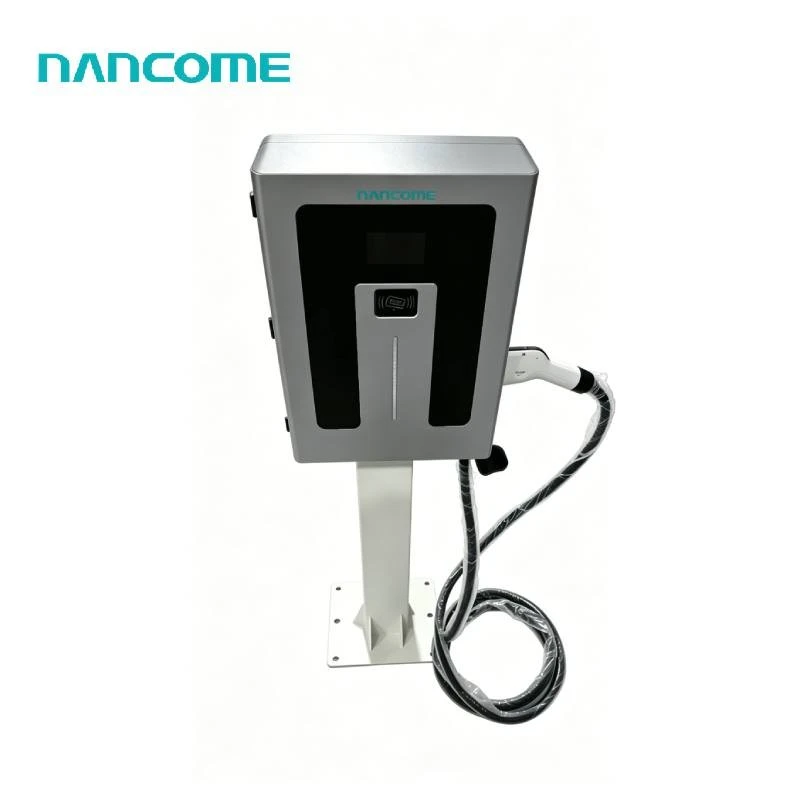
Investment Drivers
What DC Fast Charging Adds to a Retail Property
A useful customer service
Drivers can add meaningful energy while shopping, dining or using other services without planning a separate charging stop.
A reason to select the property
Charging availability can influence where an EV driver parks when several nearby retail destinations offer similar stores or services.
Managed parking value
The property can define user access, pricing, charging limits and overstay policies according to its operating model.
Tenant support
Charging can support retailers, restaurants, cinemas, service businesses and other tenants serving EV-driving customers.
Operational data
Connected chargers can provide session, energy, availability and fault data for service planning and future expansion decisions.
Phased infrastructure
An initial charger group can be planned with reserved electrical and civil capacity for additional bays when measured demand increases.
AC and DC Roles
Why Shopping Centers Often Need a Charging Mix
Not every parking bay needs DC fast charging. The strongest retail layout may combine AC charging for longer visits with selected DC bays for drivers needing faster energy delivery.
| Charging option | Parking behavior | Typical retail role | Advantages | Planning concern |
|---|---|---|---|---|
| AC charging | Longer customer, employee or tenant parking | Distributed charging across more bays | Lower power per bay and practical for longer dwell periods | May deliver insufficient energy for drivers making a short visit |
| 30–40kW DC | Medium-duration retail visits | Moderate-speed destination charging | Can match properties where customers remain for one or more activities | Vehicle turnover and actual accepted power must justify the DC investment |
| 60–120kW DC | Shorter visits or higher vehicle turnover | Faster public charging for busy commercial parking | Provides more energy during a limited stop for compatible vehicles | Requires greater transformer, distribution and peak-load capacity |
| 160kW and above | Fast-charging hub behavior | Large retail developments or sites near major travel routes | May support higher turnover when vehicle and grid conditions allow | Higher equipment, civil, cooling and electrical-infrastructure requirements |
| Mixed AC and DC | Customers, employees and different visit durations | Segmented parking service | Matches charging cost and speed to actual user groups | Requires clear signage, bay policy and load management |
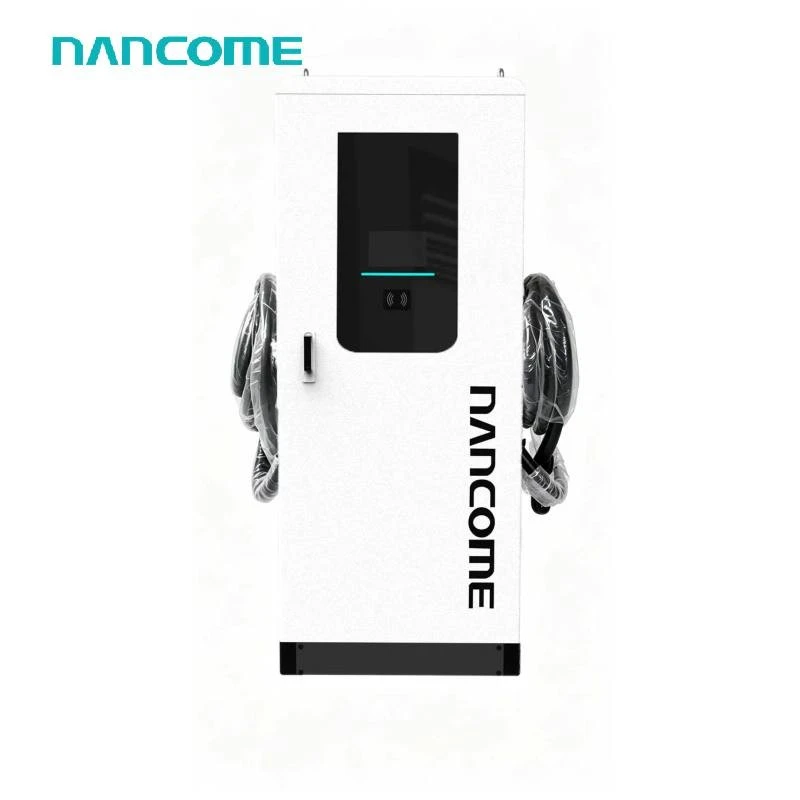
Retail charger output, connector count and cable arrangement should be selected from parking behavior and vehicle demand.
Dwell-Time Matching
Charging Power Should Fit the Customer Visit
A charger cannot deliver more than the vehicle requests, and accepted power usually changes during a charging session. Shopping centers should therefore size equipment around useful energy delivered during a realistic visit rather than around the largest advertised cabinet rating.
Estimate how many kilowatt-hours the typical driver needs before leaving the property.
Use actual parking-duration data for different customer groups and times of day.
Review local battery platforms, charging curves and connector standards.
Commercial Operation
How Shopping Centers Can Structure the Charging Service
| Operating model | How it works | Suitable objective | Items to define |
|---|---|---|---|
| Complimentary charging | The property absorbs energy and operating costs | Customer amenity or promotional service | Access eligibility, session limit, overstay policy and cost budget |
| Paid public charging | Drivers pay by energy, time, session or another locally permitted method | Recover operating costs or run a commercial service | Tariff, tax, payment integration, metering and customer support |
| Validated customer charging | Retail purchase or membership provides a discount or charging allowance | Connect charging benefits with customer activity | Validation method, tenant participation and backend integration |
| Third-party operator | An external charging operator manages equipment and users under contract | Reduce the property team's direct operating scope | Ownership, revenue sharing, uptime obligations, maintenance and data access |
| Tenant or fleet access | Selected bays are restricted to tenants, delivery vehicles or property fleets | Support operational vehicles alongside public charging | RFID accounts, priorities, time windows and internal cost allocation |
Investment Review
Evaluate the Complete Cost, Not Only the Charger Price
- Charging equipment: cabinets, connectors, cables, payment and communication hardware.
- Electrical infrastructure: transformer, switchgear, protection, distribution cables and metering.
- Civil work: foundations, trenches, conduits, drainage, bollards, markings and signage.
- Network and software: connectivity, OCPP backend, payment service and data management.
- Permits and professional services: local design, approvals, inspection and commissioning.
- Operation: electricity, demand charges where applicable, payment fees and customer support.
- Maintenance: preventive inspection, cleaning, cables, cooling components and spare parts.
- Parking opportunity cost: use of high-value bays and control of vehicles remaining after charging.
- Expansion: reserved capacity that can reduce later reconstruction.
The correct investment model depends on local electricity tariffs, parking policy, equipment ownership and the property's commercial objective. Current costs and incentives must be verified in the destination market.
Useful financial calculations
Electrical Planning
Grid Capacity Often Sets the Real Project Limit
A shopping center already has major electrical loads from cooling, lighting, refrigeration, lifts, kitchens and tenant spaces. Charger capacity must be evaluated against the property's peak demand rather than only the transformer nameplate.
Review load profiles
Compare customer charging demand with the center's weekday, weekend and seasonal electrical peaks.
Set a site limit
Define the maximum combined charging load that the electrical system can support safely.
Use power allocation
Dynamic allocation can distribute available cabinet or site power between active vehicles.
Plan expansion
Reserve switchgear capacity, conduits, foundations and communications for later bays where feasible.
Evaluate storage carefully
Assess energy storage from measured site demand, tariffs, charge cycles and the required operating objective.
Coordinate approvals
Utility connection, electrical design, permitting and inspection can affect the project schedule.
Parking Experience
A Fast Charger Still Needs a Workable Parking Layout
| Layout factor | Retail-site requirement | Problem if ignored |
|---|---|---|
| Charger location | Visible and convenient without concentrating traffic at the main pedestrian entrance | Congestion, unsafe crossings or difficult service access |
| Cable reach | Serve different vehicle inlet positions without excessive tension or cable on driving lanes | Damaged cables, unusable bays or poor driver positioning |
| Bay turnover | Clear charging, idle and overstay policies | Charged vehicles block access for waiting drivers |
| Accessibility | Follow local requirements for bay dimensions, controls and access routes | Charging service may not be usable by all customers |
| Impact protection | Bollards or equivalent protection positioned without obstructing connector use | Vehicle damage to the charger cabinet |
| Weather and drainage | Stable foundation, water drainage, lighting and appropriate outdoor protection | Standing water, accelerated deterioration or unsafe access |
| Maintenance clearance | Technicians can access doors, filters, cables and internal modules safely | Longer service work or closure of several parking bays |
Installation teams can also review DC charging station installation requirements and outdoor charger IP ratings.
Smart Operation
Connected Management Supports Multi-Bay Retail Charging
Live status
Operators can identify available, charging, faulted or offline connectors from a compatible management platform.
User access
RFID, applications, membership or payment workflows can support public, tenant and staff charging policies.
Session records
Charging duration, energy and termination data help evaluate utilization and investigate customer issues.
Fault alerts
Time-stamped alarms help service teams prepare before visiting the property.
Power management
Available charging power can be allocated between connectors within the selected system design.
Performance review
Operators can compare energy delivery, occupancy and downtime before approving expansion.
Exact functionality depends on the charger, OCPP version and backend implementation. See smart monitoring for DC charger management.
Project Sequence
From Parking Data to an Approved Charger Layout
Review EV traffic, visit duration, parking turnover and competing chargers.
Assess transformer capacity, load profiles and connection requirements.
Match power, voltage, connectors, cables and simultaneous charging.
Confirm pricing, payment, access, OCPP and maintenance responsibilities.
Finalize layout, civil work, protection, testing and expansion provisions.
Procurement Data
Information Needed for a Shopping Center Charger Recommendation
- Property: country, shopping center type, parking capacity and operating hours.
- Customer behavior: average visit duration and peak parking periods.
- Vehicle demand: estimated EV visits, battery platforms and connector standards.
- Charging target: expected energy per customer and desired bay turnover.
- Electrical supply: transformer capacity, available spare capacity and load profile.
- Initial layout: number of AC and DC bays and distance from the electrical room.
- Simultaneous charging: maximum active connectors and required output per bay.
- Commercial model: free, paid, validated, tenant-only or third-party operated.
- Management: OCPP version, backend platform, payment and RFID requirements.
- Site environment: indoor or outdoor parking, temperature, drainage and protection.
- OEM needs: cabinet color, logo, interface language and labeling.
Newcom's NEDF series lists 40–240kW floor-mounted configurations, DC200–1000V output, 0–300A series current, two standard connectors, project configurations supporting up to four guns, IP54 protection and remote operation support. Final output and connector allocation must be confirmed for the ordered model.
Retail charging options to review
- Power: 40 / 60 / 80 / 120 / 160 / 180 / 240kW
- Voltage: DC200–1000V
- Connectors: two standard; project options available
- Standards: CCS1 / CCS2 / GB/T / CHAdeMO options
- Cable: standard 5m; optional upgrade
- Cooling: air cooling; liquid cooling optional
- Installation: floor-mounted, indoor or outdoor
- Enclosure: IP54
- Management: remote operation and optional OCPP
- Customization: project-specific OEM/ODM
Related Products and Resources
Compare Retail Charging Equipment and Planning Guides
Buyer Questions
Shopping Center DC Fast Charging FAQ
Why do shopping centers install DC fast charging stations?
DC fast charging provides useful energy during a limited retail visit. It can improve the parking service, support EV-driving customers and provide a managed charging operation with session, payment and equipment-status data.
Should a shopping center install AC chargers or DC fast chargers?
The choice depends on parking duration and customer needs. AC charging suits longer stays and wider bay coverage, while DC charging serves drivers needing more energy during a shorter visit. Many properties can use a planned combination.
What DC charger power is suitable for retail parking?
Possible configurations range from moderate 30–40kW destination charging to 60–120kW for faster turnover and higher ratings for selected hub locations. Final power must match vehicles, dwell time, utilization and electrical capacity.
Can a shopping center charge customers for using an EV charger?
Charging can be free, paid, validated or managed by a third-party operator, subject to local regulations. The property must define tariffs, payment integration, metering, tax treatment, customer support and overstay rules.
Do DC fast chargers increase customer spending?
Charging may influence destination choice or activity during a visit, but additional spending should not be assumed. Shopping centers should measure charging sessions against parking, loyalty or transaction data where appropriate.
Can two vehicles charge from one shopping center DC charger?
A dual-connector charger can support two bays when configured for simultaneous charging. Buyers must confirm the maximum output per connector and whether power is fixed, shared equally or allocated dynamically.
What information is needed for a shopping center EV charging quotation?
Provide the country, property and parking size, visit duration, expected EV demand, connector standards, target power, charger quantity, transformer capacity, cable distance, payment model, OCPP platform, installation environment and OEM requirements.
Match Retail Charging Investment to Real Parking Demand
Send the shopping center layout, customer dwell time, expected EV traffic, transformer capacity, connector standards, charging-service model and future expansion plan.
Project Inquiry
Shopping Center DC Charging Project Request
Include the destination country, parking capacity, average customer dwell time, expected EV traffic, target power, connector standards, charger quantity, transformer capacity, payment or OCPP requirements, installation environment and OEM needs.