How Hotels Benefit from Installing DC EV Charging Stations
Aug 18, 2026
Hotel EV Charging Infrastructure
How Hotels Benefit from Installing DC EV Charging Stations
A hotel DC EV charging station gives electric vehicle drivers access to useful charging during an overnight stay, meal, meeting or short stop. For the property, it can improve guest convenience, support corporate travel requirements and turn part of the parking facility into a managed service.
Property Value
What DC Charging Can Add to a Hotel
Guest convenience
Drivers can recharge at the property instead of finding a separate public station before departure.
Short-stay coverage
DC charging can serve restaurant, spa, meeting and event visitors who do not remain overnight.
Corporate travel support
On-site charging can help hotels accommodate business travelers and organizations using electric fleets.
Managed access
The hotel can define charging access for guests, visitors, staff, transfers or selected fleet accounts.
Operational visibility
A compatible management system can provide charger status, session records, energy data and fault alerts.
Future-ready parking
Reserved electrical and civil capacity can make later charger expansion easier as EV demand develops.
Guest Segmentation
Different Hotel Guests Have Different Charging Needs
Usually have several hours available and may use AC charging unless they arrive late or leave early.
May need useful energy within a meal-length visit, making moderate-power DC charging practical.
Charging duration can range from a short meeting to a full-day event and should be matched accordingly.
Hotel shuttles, taxis and contracted transport may require predictable turnaround between journeys.
A hotel should not select charger power from room count alone. Parking duration, vehicle turnover, guest travel patterns and the number of simultaneous charging sessions are more useful planning inputs.
AC and DC Planning
Why Many Hotels Benefit from a Mixed Charging Layout
AC and DC charging solve different parking needs. A mixed layout can provide economical overnight charging while retaining faster bays for time-sensitive drivers.
| Charging option | Typical user | Hotel application | Planning consideration |
|---|---|---|---|
| 7–22kW AC | Overnight guests, staff and long-duration parking | Distributed charging across several parking bays | Check the vehicle's onboard AC charger limit and expected departure time |
| 30–40kW DC | Restaurant, meeting and medium-duration visitors | Destination charging where users remain for one or more hotel activities | Confirm that DC investment is justified by vehicle turnover and accepted power |
| 60–120kW DC | Late arrivals, early departures and travel-route guests | Faster energy delivery for shorter or less predictable stays | Requires more electrical capacity and careful bay-turnover control |
| 160kW and above | Highway hotels, resorts near travel corridors or charging hubs | Higher-turnover public charging where site demand supports it | Higher grid, cooling, civil-work and equipment requirements |
| Mixed AC and DC | Multiple guest groups | Segmented charging for overnight and short-stay parking | Requires clear bay allocation, signage, access and load management |
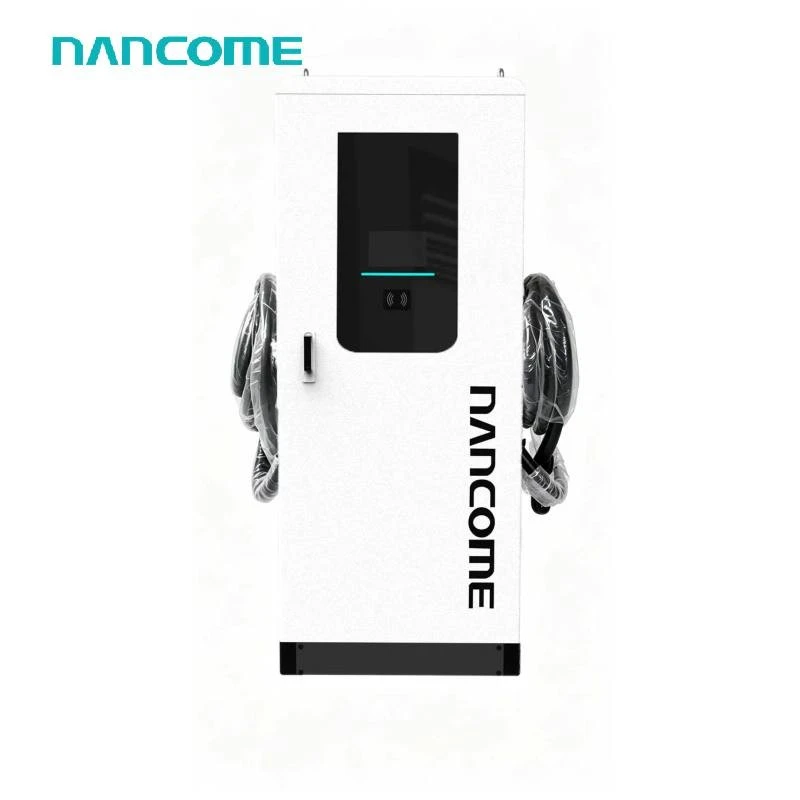
Hotel charger output should be selected from guest dwell time, expected energy demand and available site power.
Power Selection
Rated Power Is Not the Same as Energy Delivered
A 120kW charger does not continuously deliver 120kW to every connected vehicle. Actual charging power is affected by battery voltage, state of charge, temperature, the vehicle's current limit and its charging curve.
- Estimate required energy: determine how many kilowatt-hours a typical guest needs before departure.
- Measure available time: separate overnight stays from restaurant, event and transit visits.
- Review target vehicles: identify connector standards, voltage platforms and expected charging curves.
- Allow for simultaneous use: confirm how cabinet power is divided when two vehicles charge together.
- Check site capacity: compare the proposed charging load with existing hotel peak demand.
Hotel Operations
Choose a Charging Model That Fits the Property
| Operating model | How it works | Suitable objective | Items to define |
|---|---|---|---|
| Complimentary guest charging | Eligible guests receive charging as part of their stay | Provide a hotel amenity | Eligibility, session limit, energy allowance and overstay policy |
| Paid charging | Users pay according to energy, time, session or another locally permitted method | Recover operating costs or provide a commercial service | Tariff, payment method, metering, tax and customer support |
| Room-linked charging | The session is associated with a guest account or room | Integrate charging into the guest-service workflow | System compatibility, staff procedure and billing reconciliation |
| Validated visitor charging | Restaurant, conference or spa customers receive an allowance or discount | Support non-resident hotel customers | Validation method, limits and participating hotel departments |
| Public charging | Drivers may use the charger without booking a hotel service | Serve local or travel-route charging demand | Parking access, operating hours, tariffs, security and support |
Electrical Capacity
The Hotel's Existing Loads Must Be Considered
Review peak demand
Compare charger operation with HVAC, kitchens, lifts, laundry, lighting and event-space demand.
Set a charging limit
Define the maximum combined charging load the site can support safely.
Allocate power
Compatible systems can distribute available power between active connectors.
Plan future bays
Reserve conduits, switchgear space, communication routes and foundation areas where practical.
Check tariffs
Electricity and demand-charge structures can materially affect the operating model.
Coordinate approvals
Utility connection, permits, electrical design and inspection may determine the project schedule.
Parking Layout
Charger Placement Affects Both Guests and Hotel Operations
| Layout factor | Hotel requirement | Risk if overlooked |
|---|---|---|
| Guest access | Easy to locate without disrupting the main arrival and valet area | Congestion or confusion near the entrance |
| Public access | Define whether non-guests can enter the parking facility and at what times | Security, parking-control or after-hours access problems |
| Cable reach | Accommodate different vehicle inlet positions without stretching cables | Unusable bays, cable damage or trip hazards |
| Bay turnover | Use clear charging and overstay rules for limited DC bays | Fully charged vehicles block access for arriving guests |
| Accessibility | Follow local requirements for parking dimensions, controls and access routes | The service may not be usable by all guests |
| Impact protection | Use suitable barriers without obstructing charger operation | Vehicle damage to the cabinet or cables |
| Maintenance access | Allow technicians to reach filters, modules, doors and cables | Longer outages or closure of additional parking bays |
Project teams should also review DC charger installation requirements and IP ratings for outdoor DC EV chargers.
System Management
Connected Charging Reduces Manual Hotel Work
Charger status
Authorized staff can identify available, occupied, offline or faulted connectors.
Access control
RFID, applications or compatible payment methods can separate guest and public use.
Session records
Energy, duration and termination data support billing and customer-service investigations.
Fault notification
Remote alarms help maintenance teams prepare before visiting the property.
Power management
Available site or cabinet power can be allocated between active charging sessions.
Utilization review
Hotels can evaluate energy delivery, occupancy and downtime before adding more chargers.
Available functions depend on the charger configuration, backend platform and OCPP implementation. Review OCPP DC EV charger options before confirming system integration.
Deployment Process
From Guest Demand to a Hotel Charging Layout
Separate overnight guests, visitors, staff and hotel-operated vehicles.
Estimate the time and energy available for each user group.
Review transformer capacity, load profiles and tariff conditions.
Confirm AC/DC mix, connectors, power sharing, payment and OCPP.
Finalize bays, civil work, protection, commissioning and expansion.
Procurement Information
What to Provide When Requesting a Hotel Charger Recommendation
- Property details: country, hotel type, room count and parking capacity.
- Guest profile: business, resort, airport, highway, conference or mixed use.
- Parking behavior: average overnight stay and short-visit duration.
- Charging demand: estimated EV visits and required energy per vehicle.
- Target vehicles: passenger cars, hotel shuttles, taxis or contracted fleets.
- Connector standards: CCS1, CCS2, GB/T or CHAdeMO according to the market.
- Electrical supply: transformer rating, spare capacity and existing peak load.
- Charger quantity: initial AC and DC bays plus future expansion expectations.
- Operating model: complimentary, paid, validated, room-linked or public.
- Management: RFID, payment, OCPP version and backend platform.
- Installation environment: covered or outdoor parking, climate and cable route.
- Customization: cabinet color, hotel logo, interface language and labeling.
Newcom's NEDF series provides project configurations from 40kW to 240kW, DC200–1000V output, two standard connectors, IP54 protection and remote-operation support. Exact output, current, connector allocation and optional functions must be confirmed for the selected model.
Hotel project options to review
- Power: 40 / 60 / 80 / 120 / 160 / 180 / 240kW
- Output voltage: DC200–1000V
- Output current: 0–300A series range
- Connectors: two standard; project options available
- Standards: CCS1 / CCS2 / GB/T / CHAdeMO options
- Cable: standard 5m; optional upgrades
- Installation: floor-mounted, indoor or outdoor
- Protection: IP54
- Management: remote operation and optional OCPP
- Customization: project-specific OEM/ODM
Related Products and Guides
Compare Commercial Charging Equipment
Buyer Questions
Hotel DC EV Charging Station FAQ
Why should a hotel install a DC EV charging station?
A DC charger can provide useful energy for guests with limited parking time, including restaurant visitors, meeting attendees, late arrivals and drivers continuing a longer journey. It can complement slower overnight AC charging.
Does every hotel need DC fast charging?
No. Hotels serving mainly overnight guests may meet much of their demand with AC chargers. DC charging becomes more relevant when the property also serves short-stay visitors, travel-route drivers, taxis, transfer vehicles or public charging users.
What DC charger power is suitable for hotel parking?
Moderate 30–40kW charging may suit longer destination visits, while 60–120kW can support faster guest turnover. Higher ratings may be considered for highway hotels or public charging hubs. Final power depends on dwell time, vehicles and site capacity.
Should hotels combine AC and DC EV chargers?
A mixed system is often practical. AC chargers can serve overnight parking at lower power per bay, while selected DC bays support short-stay guests and vehicles requiring faster energy delivery.
Can hotels charge guests for EV charging?
Hotels may offer complimentary, paid or validated charging, subject to local requirements. The property should define tariffs, access, metering, payment, tax treatment, session limits and overstay policies.
Can one hotel DC charger serve two vehicles?
A dual-connector charger can serve two parking bays when configured for simultaneous charging. Buyers should confirm the maximum output per connector and how power is divided or dynamically allocated.
Can a hotel charger connect to a management platform?
Compatible OCPP chargers can connect to supported backend systems for status monitoring, access control, session data, billing and fault reporting. Compatibility should be tested with the selected platform before deployment.
What information is needed for a hotel charging quotation?
Provide the country, hotel type, parking capacity, guest dwell time, expected EV demand, target vehicles, connector standards, charger quantity, available electrical capacity, charging model, OCPP requirements, installation environment and OEM needs.
Match Hotel Charging Power to Real Guest Parking Behavior
Send the property type, parking capacity, guest dwell time, expected EV traffic, transformer capacity, connector standards and planned charging model.
Project Inquiry
Hotel DC EV Charging Project Request
Include the destination country, hotel type, room and parking capacity, guest dwell time, expected EV traffic, target power, connector standards, charger quantity, transformer capacity, payment or OCPP requirements, installation environment and OEM needs.