
Typical Applications of DC EV Charging Stations in Public Infrastructure
Aug 14, 2026
Public Charging Infrastructure
Typical Applications of DC EV Charging Stations in Public Infrastructure
DC EV charging stations are used where vehicles need meaningful energy during a limited stop. Typical public-infrastructure applications include highway service areas, urban charging hubs, municipal parking, airports, transport terminals, taxi facilities, bus or public fleets, logistics corridors and destination parking with higher turnover.

Application Logic
Why Public Infrastructure Uses DC Fast Charging
Public chargers serve drivers who cannot always wait for a long AC charging session. DC equipment converts power inside the charger and supplies regulated direct current according to the vehicle's request.
Limited dwell time
Drivers at highways, terminals and urban hubs often need to continue their journeys quickly.
Shared public access
One station must accommodate different users, vehicle battery platforms and connector standards.
High daily utilization
Public equipment may complete many sessions and needs practical fault reporting and maintenance access.
Network operation
Operators need authorization, session records, energy data and remote charger status.
Common Deployments
Eight Public-Infrastructure Applications
Highway service areas
Short stopHighway charging supports intercity travel where drivers expect fast energy replenishment and clear access from the travel route.
- Peak demand may change sharply during weekends and holidays
- Higher-power, dual-connector or multi-charger layouts may improve turnover
- Outdoor protection, lighting, drainage and remote monitoring matter
- Expansion space should be reserved for future traffic
Urban public charging hubs
Mixed usersUrban hubs serve residents without private charging, commercial drivers and motorists needing a faster top-up.
- Connector choice must reflect the local vehicle population
- Queueing and circulation should not block surrounding roads
- Payment, RFID or application access may be required
- Remote fault reporting supports distributed operation
Municipal parking facilities
Public accessMunicipal parking can combine moderate-power DC charging for short visits with AC charging for longer stays.
- Use parking-duration data before deciding charger power
- Plan accessible bays and safe pedestrian routes
- Coordinate charger billing with parking policy where needed
- Allow safe access for inspection and maintenance
Airports and transport terminals
Multiple dutiesTerminals may serve passengers, rental vehicles, taxis, service fleets and shuttle vehicles with different charging windows.
- Separate public, fleet and restricted-access charging areas
- Match power to vehicle turnaround and dispatch priorities
- Protect chargers from traffic impact and luggage operations
- Provide dependable communication and user instructions
Taxi and ride-hailing facilities
High utilizationCommercial drivers need predictable charging between shifts without excessive idle time.
- Use shift schedules and daily energy demand for sizing
- Multiple connectors can reduce queue risk
- Driver or fleet authentication can control access
- Charging records support operating-cost review
Public bus and shuttle depots
Scheduled fleetBus and shuttle projects are designed around routes, battery capacity, layover periods and overnight depot schedules.
- Vehicle charging curves must be confirmed
- Power allocation should reflect route priorities
- Grid capacity may limit simultaneous charging
- Backup planning is important for service continuity
Logistics and truck corridors
Heavy-duty demandElectric trucks and logistics fleets have larger energy requirements and stricter operating schedules than typical passenger vehicles.
- Review battery size, connector position and vehicle dimensions
- Provide suitable turning radius and drive-through access
- Calculate energy demand across scheduled rest periods
- Plan transformer and expansion capacity early
Retail and public destination parking
Medium dwellShopping centers, civic venues and public attractions can use DC charging for visitors who need more energy during a one- to several-hour stay.
- Moderate DC power may fit longer customer dwell time
- AC and DC equipment can serve different parking patterns
- Clear pricing and overstay policies improve bay turnover
- Integration with parking systems may be required
Configuration Comparison
Match Charging Power to the Public Use Case
The ranges below are project-screening references. Final output depends on target vehicles, charging windows, current limits, site supply and the number of simultaneous sessions.
| Application | Operating pattern | Possible configuration direction | Connector approach | Critical project data |
|---|---|---|---|---|
| Highway service area | Short stops, variable peak traffic | Higher-power 120–240kW units or a multi-charger layout | Dual or mixed connectors based on market vehicles | Peak arrivals, dwell target, grid capacity and expansion plan |
| Urban public hub | Mixed passenger and commercial users | 60–180kW depending on traffic and electrical supply | Local-market standard with mixed options where justified | Vehicle registrations, session demand and payment method |
| Municipal parking | Short and long parking periods | 30–120kW DC supported by AC charging where appropriate | Single or dual connector | Parking duration, turnover and public-access policy |
| Airport or terminal | Public users plus taxis, rental and service fleets | Separate charger groups sized by user type | Project-specific connector mix | Vehicle groups, access control and turnaround schedule |
| Taxi facility | Repeated daily sessions and shift peaks | 80–180kW with multiple charging bays | Fleet-compatible connectors | Battery size, daily distance, return times and simultaneous demand |
| Bus or shuttle depot | Scheduled charging between routes or overnight | Power selected from route energy and available charging window | Vehicle-specific interface | Fleet timetable, battery capacity and departure priority |
| Truck corridor | Large batteries and regulated stopping periods | 120–240kW or project-specific higher-power equipment | Heavy-vehicle connector compatibility | Truck model, battery data, parking geometry and grid supply |
| Retail destination | One- to several-hour customer dwell | 30–120kW DC, potentially combined with AC bays | Local passenger-vehicle standard | Average stay, turnover, site load and charging-service policy |
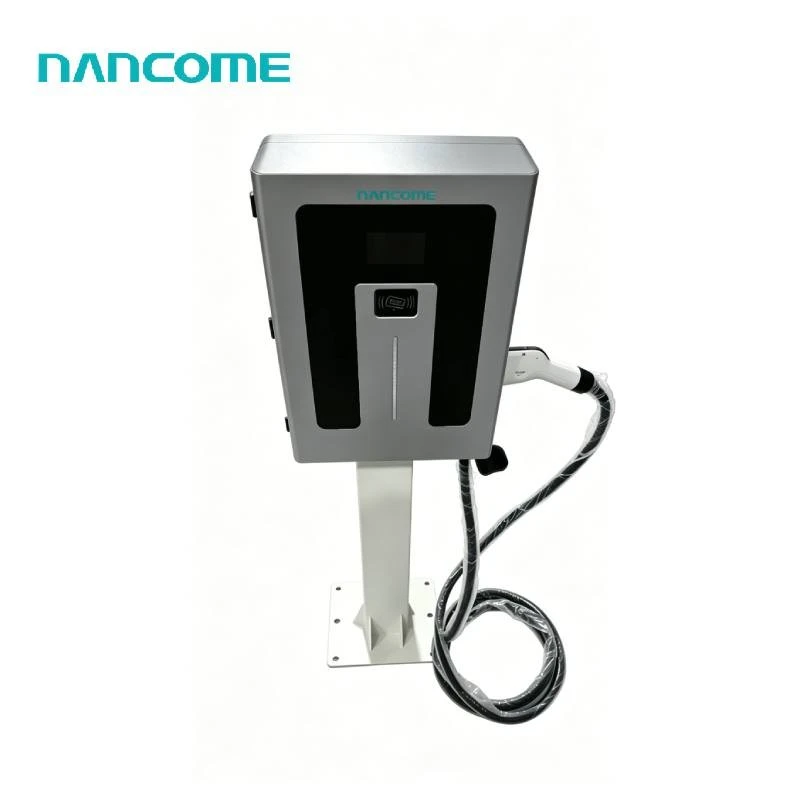
Parking duration and expected vehicle turnover should determine whether a site needs moderate or high-power DC charging.
Demand Calculation
Three Inputs Matter More Than the Site Name
Two highway locations or municipal car parks can require very different charger layouts. Project sizing should begin with measured or forecast operating data.
Determines the likely number of charging bays and the queue risk during busy periods.
Estimate from vehicle duty, arrival state of charge and the energy needed before departure.
Connects required energy with the practical output each vehicle must receive during its stop.
Layout and Civil Works
Public Charging Design Extends Beyond the Charger Cabinet
Vehicle circulation
TrafficCharging bays should allow vehicles to enter, connect and leave without blocking through traffic or adjacent charging spaces.
Cable reach
CompatibilityVehicle inlet locations vary. Confirm cable length, charger position and parking orientation without leaving excessive cable on the ground.
Impact protection
SafetyBollards or other site protection should prevent vehicle contact while preserving service access and cable handling.
Accessible use
Public accessBay dimensions, controls, cable handling and pedestrian routes must be reviewed against local accessibility requirements.
Weather and drainage
OutdoorFoundation height, surface drainage, direct sun, wind-driven rain and local flood risk affect long-term installation performance.
Maintenance clearance
ServiceTechnicians need safe access to doors, filters, modules, cable entries and protective devices without closing the entire site.
Civil, electrical and operational planning should be coordinated before installation. See common DC charging station installation requirements.
Public Operation
Functions Needed After the Station Opens
| Operating function | Public-infrastructure value | Requirement to confirm |
|---|---|---|
| User authentication | Controls who can start charging and supports public or fleet access policies | RFID, application, account, payment or plug-and-charge workflow |
| Session records | Provides charging time, energy and termination information | Required data fields, storage period and export method |
| Remote status | Shows available, charging, faulted or offline connectors | Backend platform, OCPP version and network connection |
| Fault notification | Allows service teams to respond before a fault creates extended downtime | Alarm mapping, notification rules and escalation procedure |
| Power management | Allocates limited site capacity between several charging sessions | Maximum site load and per-connector allocation logic |
| Pricing and payment | Supports commercial or municipal charging-service operation | Local payment provider, currency, tax and transaction requirements |
| Remote service | Supports diagnosis and approved reset functions without every issue requiring a site visit | Authorized commands, user roles and service responsibilities |
Connected projects can review smart monitoring for DC charging station management and OCPP DC charger options.
Infrastructure Planning
Grid Capacity and Expansion Must Be Evaluated Together
- Available capacity: confirm transformer rating, incoming supply and other site loads.
- Peak demand: calculate the maximum number of chargers expected to operate simultaneously.
- Power sharing: define whether cabinet output is fixed, equally divided or dynamically allocated.
- Expansion: reserve conduits, switchgear capacity, foundations and communication routes where practical.
- Energy storage: assess only after modeling site load, charging demand, tariff structure and operating objective.
- Availability: consider how many bays remain operational when one charger is under service.
- Utility coordination: include connection lead times and required approvals in the project schedule.
Newcom's NEDF outdoor floor-mounted platform lists 40–240kW configurations, DC200–1000V output, 0–300A series output current, two standard connectors, project configurations supporting up to four guns, IP54 protection and remote operation support. Final model and simultaneous output require project confirmation.
Data required for public-site sizing
- Location: country, city and site type
- Traffic: daily vehicles and peak-hour arrivals
- Vehicles: models, battery voltage and connectors
- Energy: required kWh per typical session
- Dwell: available charging time
- Bays: initial and future connector quantity
- Grid: transformer and available site capacity
- Operation: payment, RFID and OCPP platform
- Environment: indoor, outdoor and climate data
- OEM: cabinet, branding and language needs
Related Applications and Equipment
Compare Public DC Charging Configurations
Buyer Questions
Public DC Charging Infrastructure FAQ
Where are DC EV charging stations commonly used in public infrastructure?
Common applications include highway service areas, urban public charging hubs, municipal parking, airports, transport terminals, taxi facilities, public bus or shuttle depots, truck corridors and destination parking with higher vehicle turnover.
What charger power is suitable for a public charging station?
The suitable power depends on target vehicles, energy needed per session, dwell time, peak traffic, connector quantity and site electrical capacity. A municipal car park may need a different configuration from a high-traffic highway site.
Should a public station use single or dual-connector DC chargers?
Single-connector equipment can suit predictable or lower-volume demand. Dual-connector chargers can serve two bays, but buyers must confirm simultaneous operation, maximum output per connector and the power-allocation method.
Which charging connector standard should public infrastructure use?
Select CCS1, CCS2, CHAdeMO or GB/T from the actual local vehicle population and destination-market requirements. Mixed connectors may be considered when more than one vehicle group has meaningful demand.
Can public DC chargers support remote monitoring and payment?
Compatible chargers can support OCPP-based backend integration, status monitoring, session records and configured user-access or payment workflows. Confirm the protocol version, backend platform and local payment requirements before production.
What makes a highway charging project different from municipal parking?
Highway users generally have shorter dwell targets and demand can increase sharply during peak travel periods. Municipal parking often has longer stays and may use a combination of AC and moderate-power DC chargers.
What information is needed for a public charging station quotation?
Provide the destination country, site type, vehicle models, daily and peak traffic, required energy per session, dwell time, charger and connector quantities, transformer capacity, OCPP platform, payment requirements, installation environment and OEM needs.
Configure Public Charging Around Traffic, Vehicles and Grid Capacity
Send the site layout, destination country, target vehicles, peak traffic, dwell time, connector standards, available electrical capacity and operating-platform requirements.
Project Inquiry
Public DC Charging Infrastructure Request
Include the destination country, application, target vehicles, peak-hour traffic, required energy per session, dwell time, connector standards, charger quantity, transformer capacity, OCPP or payment requirements and OEM needs.