

DC Charger
The charger controller collects session, connector, alarm and operating information supported by the configured system.
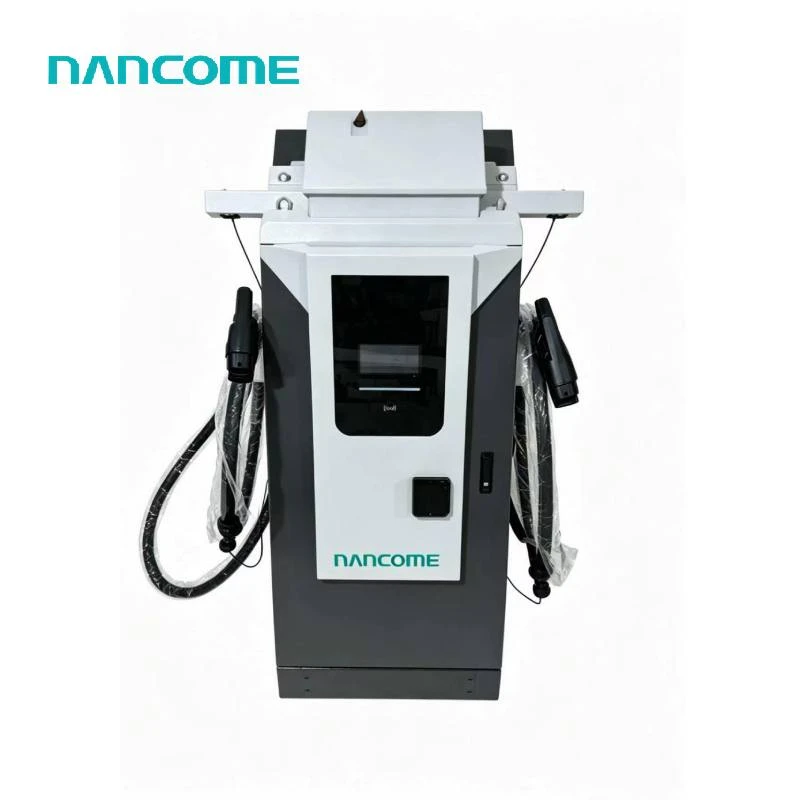
• 4G connectivity supports remote charger management • SIM and APN settings configured for local networks • Optional OCPP enables charging-platform integration • 40–240kW commercial power options available • DC200–1000V supports varied EV platforms • CCS1, CCS2, GB/T and CHAdeMO options • Ethernet and Wi-Fi alternatives available
A 4G DC EV Charger uses a compatible cellular connection to exchange operational data with a charging-management platform. It can support public stations, fleet depots and distributed charging sites where a suitable mobile network is available.
Successful 4G operation depends on more than installing a SIM card. The modem bands, network operator, SIM type, APN, antenna arrangement, OCPP settings and backend address must be confirmed for the destination market.
The cellular modem provides the network path, while the charging protocol and backend configuration define how charger data is exchanged. Each layer must be compatible for commissioning to succeed.
The charger controller collects session, connector, alarm and operating information supported by the configured system.
The modem must support the applicable cellular network and frequency bands used by the destination operator.
The SIM subscription, APN, data service and site signal conditions determine whether the connection can be established.
The platform receives supported charger messages after the endpoint, credentials, protocol and security settings are validated.
The ordered technical schedule should identify both the DC charging hardware and the cellular communication configuration. Available combinations are reviewed against project requirements.
| Category | Selection Item | Available Specification |
|---|---|---|
| AC Input | Voltage Range | AC380V ±20% |
| AC Input | Connection | 3P + N + PE |
| AC Input | Frequency | 45–65Hz |
| Electrical | Power Factor | ≥0.95 under normal output power |
| DC Output | Rated-Power Options | 40 / 60 / 80 / 120 / 160 / 180 / 240kW |
| DC Output | Voltage Range | DC200–1000V |
| DC Output | Series Current | 0–300A; final limit depends on configuration |
| Interface | Connector Options | CCS1 / CCS2 / GB/T / CHAdeMO |
| Interface | Connector Quantity | 2 standard; project options up to 4 guns |
| Cable | Standard Length | 5m; optional length upgrade available |
| Cooling | Cable Cooling | Air cooling; liquid cooling optional |
| Communication | Network Methods | 4G / LAN / Wi-Fi by ordered configuration |
| Communication | Charging Protocol | Optional OCPP; version confirmed by project |
| Communication | Cellular Setup | SIM, APN and operator settings require confirmation |
| Environment | Operating Temperature | -20°C to 50°C |
| Environment | Storage Temperature | -40°C to 85°C |
| Environment | Humidity | 5–90% RH, non-condensing |
| Environment | Altitude | ≤2000m |
| Installation | Cabinet Type | Floor-mounted; indoor or outdoor use |
| Enclosure | Protection Level | IP54 |
| Customization | Project Support | OEM, ODM and project-specific configuration |
A general coverage map does not confirm the signal available inside a metal charger cabinet at a specific parking site. Test the intended operator under realistic installation conditions.
Measure service where the charger will stand, including the effect of buildings, basements, metal structures and nearby electrical equipment.
Signal quality can differ between mobile operators at the same site. Test the network intended for the project SIM rather than relying on another provider.
The enclosure and mounting position can affect reception. Confirm the antenna arrangement and permitted installation method before commissioning.
Where operational continuity is critical, assess whether LAN, Wi-Fi or another approved connection can provide a practical backup path.
Connect a charger to the operator platform when a stable wired network is unavailable at the parking facility.
Support remote status visibility across depots while keeping the charging-power design aligned with fleet schedules and site capacity.
Use an available mobile network for charger communication after coverage, antenna placement and operating redundancy are assessed.
Connect chargers at hotels, offices, shopping facilities and other sites where access to the building network may be restricted.
Cellular connectivity may simplify network preparation where a charger will operate for a limited project period.
Standardize the required SIM, APN, protocol and commissioning process across geographically separated charging locations.
The SIM supply arrangement must be defined for each project. The card must be activated for a compatible local mobile network and configured with the required data service and APN parameters.
Compatibility cannot be assumed. Provide the destination country and intended operator so the modem bands, SIM service, APN and local network conditions can be reviewed.
4G provides a network connection, while OCPP is a communication protocol used between compatible chargers and management platforms. The required OCPP version and backend must be specified separately.
LAN, Wi-Fi and 4G connection options are available within relevant product configurations. State the preferred primary and alternative network methods before the ordered configuration is confirmed.
The effect depends on the charger, authentication method and backend configuration. Required offline authorization, local transaction handling, data storage and reconnection behavior should be tested with the selected platform.
Potential integration depends on the required OCPP version, endpoint, authentication, certificates and platform-specific behavior. Compatibility testing should be completed before deployment.
Send the destination country, mobile operator, SIM and APN requirements, OCPP version, backend details, charger power, vehicle voltage, connector standard, site supply, cable requirements, quantity and OEM needs.
Send the destination market, mobile operator, SIM and APN details, OCPP platform, power rating, connector standard and installation requirements for configuration review.
Hot Tags: 4g dc ev charger, China 4g dc ev charger manufacturers, suppliers, factory
(0/10)


