Why Remote Monitoring Matters for Commercial EV Charging Networks
Aug 26, 2026
Charging Network Operations
Why Remote Monitoring Matters for Commercial EV Charging Networks
Remote monitoring gives charging-network operators continuous visibility into charger availability, active sessions, energy delivery, communication status and reported faults. It helps an operations team detect problems before a driver report, distinguish recoverable software conditions from hardware failures and send technicians with more useful diagnostic information.
A charger that is powered on is not necessarily ready to serve a vehicle. Commercial operators need to know whether authorization, connector communication, power conversion, cooling, payment and backend communication are working together. Remote monitoring turns those operating signals into actionable maintenance and network-management information.
Network Visibility
A Multi-Site Network Cannot Depend on Physical Inspection Alone
A single commercial location may be inspected regularly by local staff. That approach becomes inefficient when chargers are distributed across parking facilities, fleet depots, highway sites or different cities.
A connected management platform can consolidate equipment status and event data so the operator knows which unit requires attention, what condition was reported and whether service can be restored remotely.
- Identify unavailable chargers without waiting for a complaint.
- Compare current status with recent fault and session history.
- Separate network-wide events from isolated charger faults.
- Prioritize service according to location and operating impact.
- Confirm whether a charger returned to service after an action.
Operational Benefits
What Remote Monitoring Changes in Daily Operations
Earlier Fault Detection
Offline status, repeated session failures, temperature alarms and subsystem faults can be reviewed before they cause prolonged unnoticed downtime.
Faster Initial Diagnosis
Fault codes, event timing and charger status help the support team decide whether the issue involves communication, authorization, cooling, a connector or power hardware.
Fewer Unnecessary Visits
Approved remote checks or recovery actions may resolve selected conditions without dispatching a technician to inspect a charger that has already recovered.
Better Service Preparation
When a visit is required, the technician can arrive with the relevant manual, test equipment and approved replacement parts for the reported subsystem.
Consistent Multi-Site Control
A central operations team can apply common status definitions, alarm priorities and escalation procedures across geographically separated sites.
Evidence for Expansion
Session frequency, energy delivery, occupancy and derating records support better decisions about adding connectors, power or maintenance resources.
Monitoring Scope
Data That Should Be Visible to the Operator
The useful data set depends on charger hardware, protocol implementation and the charging management system. Buyers should specify the required information during procurement rather than assuming every connected charger exposes the same detail.
| Monitoring Category | Typical Information | Operational Question Answered | Possible Action |
|---|---|---|---|
| Availability status | Available, occupied, reserved, unavailable or offline state | Can a driver start a session at this connector? | Update public status, investigate or redirect users. |
| Session data | Start time, stop time, energy delivered and termination reason | Did the session start and end as expected? | Review repeated failures or unusual termination patterns. |
| Electrical output | Reported voltage, current, power and delivered energy | Is the charger delivering the power requested and permitted? | Compare the session with vehicle requests and site limits. |
| Thermal condition | Available module, enclosure, connector or cooling alarms | Is temperature affecting output or safe operation? | Restrict use and inspect cooling or cable components. |
| Communication health | Heartbeat, connection interruption and reconnection events | Is the charger communicating with the backend? | Inspect the local network, SIM service or backend connection. |
| Equipment faults | Fault code, affected subsystem, time and recurrence | Which component or function needs diagnosis? | Escalate according to fault severity and approved procedure. |
| Software identity | Firmware version and configuration information | Are chargers using the intended approved release? | Plan a controlled update or correct configuration mismatch. |
Incident Workflow
Turn an Alarm into a Controlled Service Response
Repeated protection trips, insulation alarms, overheating, water ingress, damaged connectors or other safety-related conditions require an approved inspection before the affected equipment returns to service.
Availability Management
Measure More Than Whether the Cabinet Is Online
A useful performance review separates communication availability from the ability to complete a charging session. A charger may remain connected to the backend while one connector, payment function or power module is unavailable.
| Network Metric | What to Measure | Why It Matters |
|---|---|---|
| Connector availability | Time each connector is ready to initiate charging | Cabinet-level status can hide a fault affecting only one connector. |
| Session start success | Authorized attempts that progress into energy delivery | It exposes access, communication and startup problems. |
| Unexpected termination | Sessions ending for a fault or communication reason | Repeated patterns may reveal equipment or interoperability issues. |
| Reduced-output events | Sessions limited by charger condition instead of vehicle request or site policy | Persistent derating can indicate module or cooling problems. |
| Mean response time | Time between fault detection and initial operational action | It evaluates whether monitoring data reaches the right team promptly. |
| Repeat-fault rate | Recurrence after reset, repair or component replacement | It helps distinguish temporary recovery from effective repair. |
Metric definitions, exclusions and reporting periods should be agreed before comparing different sites, charger models or service providers.
OCPP and the Backend
Protocol Support Must Be Verified at Function Level
OCPP provides a standardized communication path between a charging station and a compatible charging station management system. Depending on the implemented version and functions, it may support status reporting, transaction data, remote commands, configuration and firmware-related operations.
A product description stating "OCPP compatible" does not identify every supported function or confirm interoperability with a buyer's selected backend. The charger, network and management platform should be tested together using the final configuration.
- Confirm the required OCPP version and connection method.
- List every mandatory remote-monitoring and control function.
- Verify charger-to-backend field and status mapping.
- Test behavior during connection loss and reconnection.
- Confirm ownership of configuration and firmware changes.
The Open Charge Alliance maintains the OCPP specification, compliance testing and certification program. Buyers who require independently validated protocol conformity can review its official OCPP certification information and verify the exact certified product and profile.
Data and Access Control
Remote Access Requires Defined Security Responsibilities
User Permissions
Operational, financial, maintenance and administrative roles should receive only the access required for their responsibilities.
Account Protection
The backend provider's authentication, password, multi-factor access and account-recovery arrangements should be reviewed.
Communication Security
The project should define secure transport, certificate handling and network architecture for charger-to-platform communication.
Change Records
Remote configuration changes, resets and firmware actions should be attributable to an authorized user and time.
Data Retention
Session, alarm and maintenance records need an agreed retention period that matches operational and applicable legal requirements.
Update Recovery
Firmware deployment should use a documented process with compatibility checks, status verification and a recovery route if an update fails.
Deployment Scenarios
Different Networks Need Different Alarm Priorities
| Charging Environment | Highest-Value Monitoring Focus | Priority Response |
|---|---|---|
| Highway charging | Connector availability, session success, output reduction and payment access | Restore service quickly where the next charger may be far away. |
| Fleet depot | Required energy, departure readiness, charger assignment and overnight faults | Protect vehicles scheduled for the next route. |
| Public parking network | Multi-site status, authorization, connector use and repeated user failures | Direct users to available equipment and prioritize high-impact sites. |
| Shopping center or hotel | Guest access, occupied bays, session completion and communication status | Support local staff without requiring them to diagnose high-voltage equipment. |
| Truck charging site | High-power output, cooling condition, connector temperature and schedule impact | Protect vehicle turnaround and investigate repeated derating. |
Procurement Specification
Remote Monitoring Questions to Include in an RFQ
- Which OCPP version and transport method are supported?
- Which charger and connector states are reported?
- Which fault codes and subsystem alarms are available?
- Can output, voltage, current and session energy be viewed?
- Which remote commands are supported and permission-controlled?
- How does the charger operate if backend communication fails?
- Can firmware and configuration versions be identified remotely?
- What logs can be exported for technical diagnosis?
- Has the final charger been tested with the intended backend?
- Who controls accounts, certificates, updates and data retention?
- What information is available for multi-connector chargers?
- What technical-support and escalation route is provided?
The function matrix should identify charger status, measurements, alarms, remote commands, offline behavior, update capability and backend responsibilities for the exact project configuration.
Compatible Charging Hardware
Configure the Charger and Management System Together
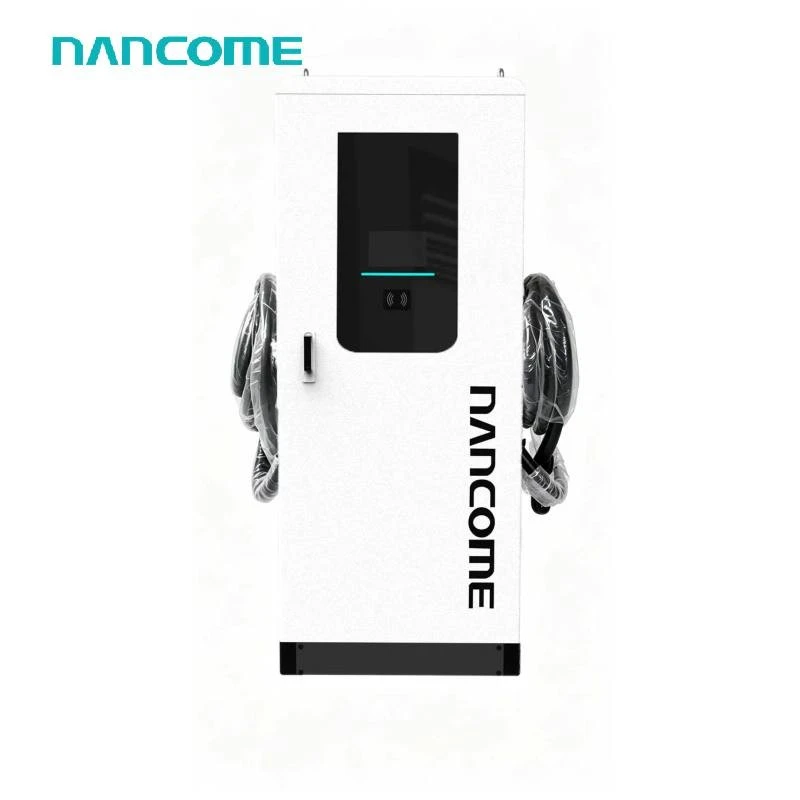
Our floor-mounted NEDF series includes 40, 60, 80, 120, 160, 180 and 240 kW configurations with a DC200–1000V output range. Connector options can include CCS1, CCS2, GB/T and CHAdeMO according to the vehicle and destination market.
Remote operation and optional OCPP can be configured according to project requirements. We recommend confirming the selected backend, communication method, required data points and remote functions before production because charger hardware alone does not define the complete monitoring system.
OCPP Integration
Review our OCPP DC EV charger options for third-party charging management platforms.
Smart Network Functions
Compare connected operating requirements for a smart DC EV charger.
Commercial Deployment
Match power and management functions to a commercial DC EV charging station project.
Fleet Readiness
Coordinate charging records and departure requirements with a fleet EV charging station.
Multiple Charging Bays
Confirm connector-level monitoring for a dual-gun DC charger.
Maintenance Planning
Use operating records with a structured DC charger maintenance program.
Buyer Questions
Commercial EV Charging Remote Monitoring FAQ
Depending on the charger and platform, operators may view availability, connector status, charging sessions, energy delivery, communication condition, fault events and firmware information. The exact data fields must be confirmed for the selected configuration.
No. It improves detection, diagnosis and service preparation but does not replace physical inspection, preventive maintenance or electrical testing. Safety-related alarms and damaged components require qualified on-site attention.
No. Remote reset should be restricted to conditions covered by an approved procedure. Repeated trips, overheating, insulation faults, damaged connectors or suspected water ingress require diagnosis before service resumes.
Remote monitoring can also be implemented through proprietary systems, but OCPP provides an open communication framework for compatible chargers and management platforms. Buyers should verify the version, functions and backend interoperability required by the project.
Behavior depends on the configured offline policy. The charger may continue selected authorized functions, restrict new sessions or become unavailable. Stored data, reconnection and event synchronization should be tested during commissioning.
Connector-level status should be visible wherever possible. One connector may be available while another is charging or faulted, so a single cabinet-level online status may not accurately represent service availability.
Please provide the destination country, charger power, quantity, connector standards, target vehicles, selected backend, OCPP version, communication method, required monitoring data, remote commands, payment or authorization functions and OEM requirements.
Specify the Monitoring Functions Before Ordering the Chargers
Send us your charger quantity, power range, connector standards, intended backend, communication method, required operating data, remote commands and network scale. We can review the charger configuration against the commercial monitoring requirements.
Request a Remote Monitoring Configuration