
How Ambient Temperature Affects DC EV Charging Station Performance
Sep 11, 2026
Outdoor Charger Thermal Performance
How Ambient Temperature Affects DC EV Charging Station Performance
Ambient temperature affects a DC EV charging station's cooling capacity, available output, auxiliary energy use and component stress. High temperatures make heat rejection more difficult and can trigger output derating, while very low temperatures can affect displays, fans, seals, cable flexibility and startup conditions. The vehicle battery can impose a separate charging limit at either temperature extreme.
A charger can remain online while delivering less than its rated power. To evaluate performance correctly, operators should distinguish between ambient temperature, internal charger temperature, connector temperature and vehicle-requested power. A slow session does not automatically mean that the charger itself is thermally limited.
Operating Envelope
Rated Power Applies Under Defined Conditions
A charger power rating should be read together with its permitted ambient range and any derating conditions. The equipment may deliver rated output only while monitored components remain within their approved temperature limits.
Temperature inside a sun-exposed enclosure can differ significantly from the reported outdoor air temperature. Charger location, solar radiation, airflow clearance, nearby heat sources and repeated high-power sessions all influence the internal thermal load.
- Minimum and maximum operating temperature
- Rated-output temperature range
- Derating start point and power-reduction logic
- Maximum storage and transport temperature
- Humidity, altitude and solar-exposure conditions
A charger may remain functional at a temperature where it cannot continuously maintain its maximum rated output. Request both conditions for the exact configuration.
Temperature Effects
What Changes as the Environment Becomes Hotter or Colder
Less Thermal Headroom
Cooling air or coolant has less ability to absorb and reject heat as ambient temperature increases. Fans, pumps and controls may work harder before output is reduced.
Normal Thermal Control
The cooling system regulates internal temperatures according to charger load. Auxiliary cooling demand may rise and fall with active power.
Cold-Weather Constraints
Materials, displays, cables, seals and cooling fluids must remain suitable for the specified temperature. The vehicle battery may also accept less power.
Use the technical documentation for the exact model, power rating, cable, cooling system and optional equipment being supplied.
High-Temperature Operation
Why Heat Can Reduce Available Charging Power
| Temperature Effect | What Happens Inside the Charger | Possible Operating Result |
|---|---|---|
| Warmer cooling air | The temperature difference available for heat transfer becomes smaller. | Fans may run faster or for longer periods. |
| Higher module temperature | Power electronics approach their permitted thermal limit. | The control system may reduce module output. |
| Hot connector or cable | Monitored connection points can approach protective thresholds. | Current may be restricted or the session may stop. |
| Repeated high-power sessions | The cabinet has less time to release stored heat between vehicles. | Later sessions may encounter lower thermal reserve. |
| Blocked airflow | Heat removal falls even if ambient temperature remains within specification. | Derating or thermal alarms can occur earlier. |
| Direct solar exposure | The enclosure absorbs additional heat beyond the electrical load. | Internal temperature can exceed nearby shaded-air temperature. |
Cold-Temperature Operation
Cold Weather Affects More Than Charging Speed
Vehicle Battery Acceptance
A cold battery can request less charging current until the vehicle warms or conditions become suitable.
Cable Flexibility
Cable and jacket materials must remain usable at the project's minimum temperature.
Display and Controls
Screens, buttons, readers and other user-interface components require verified low-temperature suitability.
Condensation
Rapid temperature changes can create moisture risks that must be addressed through enclosure and thermal design.
Seals and Mechanical Parts
Gaskets, cable glands and moving parts must remain functional throughout the stated temperature range.
Liquid-Cooling Circuit
Coolant type, concentration and freeze protection must match the lowest expected temperature.
Review vehicle-requested power and battery condition before attributing low charging speed to the station.
Charger vs Vehicle
Identify Which Side Is Limiting the Session
The charger supplies power according to the vehicle's request while enforcing its own operating limits. Diagnostic data should be used to distinguish vehicle control from charger derating.
| Observed Condition | Possible Vehicle-Side Cause | Possible Charger-Side Cause | Useful Check |
|---|---|---|---|
| Low power at session start | Cold battery or vehicle-imposed current limit | Cold-start restriction or configured output limit | Compare vehicle request with charger-available power. |
| Power decreases as charging continues | Normal charging-curve tapering | Rising module, cable or connector temperature | Review state of charge and temperature records. |
| Only later sessions are slower | Different vehicles or arrival conditions | Accumulated cabinet heat during repeated use | Compare session order, output and internal temperatures. |
| One connector derates | Vehicle on that connector requests less power | Cable, connector or assigned-module temperature | Compare both connector data under similar vehicles. |
| Site-wide output reduction | Several vehicles simultaneously request less power | Site load limit or shared thermal restriction | Review load-management and cabinet alarm records. |
Without vehicle-request data, an operator may incorrectly classify normal battery behavior as a charger fault.
Thermal Derating
Derating Protects Components from Excessive Temperature
Thermal derating is a controlled reduction in output used to keep monitored components within their permitted limits. It is different from a complete protective shutdown.
| Thermal State | Typical Charger Response | Operator Interpretation |
|---|---|---|
| Normal thermal range | Cooling operates according to load and temperature. | Available output is governed by vehicle request and configured limits. |
| Temperature rising | Fan or pump activity may increase. | Monitor whether temperature stabilizes under load. |
| Derating range | Available current or module output is reduced. | Review ambient conditions, cooling performance and session history. |
| Protective limit | The affected session, module or charger may stop. | Diagnose the cause before returning equipment to service. |
| Temperature recovered | Output may return according to the approved control logic. | Confirm stable recovery and investigate repeated events. |
It may show that the charger is underspecified for the duty cycle, installed with inadequate clearance, exposed to abnormal conditions or operating with a cooling-system problem.
Cooling-System Influence
Air and Liquid Cooling Respond Differently to Temperature
| Thermal Issue | Air-Cooled Charger | Liquid-Cooled Charger |
|---|---|---|
| High ambient temperature | Warmer intake air reduces available heat-transfer margin. | The heat exchanger has less temperature difference for rejecting coolant heat. |
| Airflow obstruction | Directly reduces cooling through modules and heat sinks. | Can still affect the coolant heat exchanger or external cooling unit. |
| Low temperature | Fans, seals and electronic components must remain suitable. | Coolant formulation and circulation conditions require verification. |
| Maintenance focus | Filters, fans, vents and heat-transfer surfaces | Coolant, pumps, tubing, fittings, sensors and heat exchanger |
| High-current cable | A passive cable may become heavier as conductor size increases. | A cooled cable can remove conductor heat under approved conditions. |
Compare the thermal architectures in our guide to air-cooled and liquid-cooled DC fast chargers.
Installation Conditions
Site Layout Can Increase or Reduce Thermal Stress
Solar Exposure
Direct sunlight can heat the enclosure and increase display glare. Evaluate orientation or an approved canopy without restricting ventilation.
Air Recirculation
Hot exhaust from one charger should not flow directly into the intake of the same or an adjacent cabinet.
Required Clearance
Maintain the specified intake, exhaust, door-opening and service clearances around the equipment.
Nearby Heat Sources
Transformers, generators, walls and mechanical equipment can raise the local temperature around a charger.
Surface Conditions
Dark paving and enclosed parking structures can create a warmer local environment than regional weather data suggests.
Site Monitoring
A representative ambient sensor helps operators compare charger behavior with actual local conditions.
The charger may experience a hotter microclimate next to paving, walls, other electrical equipment or an inadequately ventilated enclosure.
Power-Level Considerations
Higher Output Creates a Larger Heat-Rejection Task
| Project Condition | Thermal Planning Question | Procurement Check |
|---|---|---|
| Moderate-power charger | Can the cooling system maintain output throughout the expected duty cycle? | Rated power under the project's maximum ambient temperature |
| 120kW dual-port operation | How does sustained simultaneous use affect module and cable temperature? | Power-sharing and continuous operating conditions |
| 180kW commercial charging | Can repeated high-power sessions be maintained without early derating? | Duty-cycle and ambient-temperature performance |
| 240kW or higher-power use | Does the cable or cabinet require enhanced cooling? | Cable current, cooling architecture and service requirements |
| Load-managed site | Will limiting peak output provide sufficient charging performance? | Site power limit and vehicle turnaround target |
The comparison must include the power each charger can maintain under the project's temperature, solar exposure, session frequency and cooling conditions.
Monitoring and Diagnosis
Use Temperature Data to Explain Reduced Output
A connected charger can provide operating evidence that helps distinguish normal thermal control from a maintenance issue. Available data depends on charger hardware and backend integration.
| Monitoring Data | Question Answered | Possible Action |
|---|---|---|
| Ambient temperature | What environmental condition surrounded the charger? | Compare performance across similar loads and temperatures. |
| Module temperature | Are power components approaching their thermal limit? | Check cooling performance and affected module history. |
| Connector or cable alarm | Is a high-current connection limiting the session? | Restrict use and inspect the approved components. |
| Requested and delivered power | Is the vehicle or charger setting the lower value? | Separate normal vehicle behavior from charger derating. |
| Fan or pump status | Is the cooling equipment responding as intended? | Diagnose reported cooling-system faults. |
| Session sequence | Does performance decline after repeated use? | Review charger duty cycle and heat-recovery time. |
A suitable remote monitoring DC charger configuration can provide operating and fault data for multi-site thermal-performance analysis.
Maintenance Priorities
Prepare the Charger Before Seasonal Extremes
- Clean and inspect approved air filters
- Confirm that vents are not obstructed
- Review cooling-fan or pump alarms
- Inspect cable and connector condition
- Check enclosure seals and cable glands
- Verify drainage around the foundation
- Review coolant condition where applicable
- Confirm low-temperature coolant suitability
- Test cabinet heaters where fitted
- Inspect for condensation or water ingress
- Compare temperature and derating records
- Keep required cooling parts available
Temperature alarms, repeated derating and protective stops require diagnosis according to approved procedures. Increasing fan settings, resetting faults or changing limits without identifying the cause can conceal a developing problem.
Procurement Specification
Temperature Questions to Include in an RFQ
| RFQ Question | Why It Matters |
|---|---|
| What is the minimum and maximum operating temperature? | Confirms whether the complete charger is suitable for the site climate. |
| Across what temperature range can rated power be maintained? | Separates basic operation from continuous full-output capability. |
| How does thermal derating operate? | Shows when and how available power is reduced. |
| Which components and temperatures are monitored? | Defines the available protection and diagnostic information. |
| Is the cabinet or cable liquid-cooled? | Determines maintenance, coolant and spare-parts requirements. |
| What installation clearance and shading conditions apply? | Prevents the site layout from restricting the thermal design. |
| What happens after a thermal alarm or shutdown? | Defines recovery, inspection and return-to-service procedures. |
Configurable Charging Hardware
Match the Thermal Configuration to the Installation Site
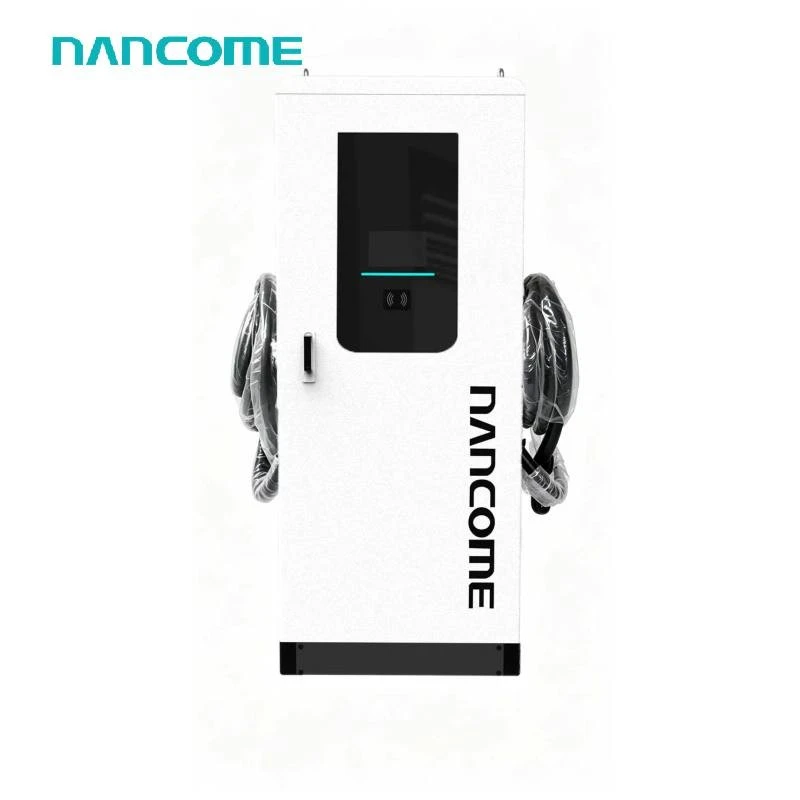
Our NEDF floor-mounted DC charging series covers 40–240kW with a DC200–1000V output range and an IP54 enclosure configuration. Air cooling is standard, while optional liquid-cooling arrangements can be reviewed according to charger power, cable current, duty cycle and environmental conditions.
Before production, we recommend confirming the project's minimum and maximum ambient temperatures, solar exposure, humidity, altitude, dust or coastal conditions, daily utilization, simultaneous output and cable requirements.
Outdoor Charging
Coordinate climate and enclosure requirements for an outdoor DC EV charger.
High-Power Operation
Review thermal requirements for a 240kW DC fast charger.
Commercial Networks
Match duty cycle and operating conditions to a commercial DC EV charging station.
Fleet Charging
Check repeated-session requirements for a fleet EV charging station.
Dual-Port Output
Confirm simultaneous thermal loading for a dual-connector DC fast charger.
Complete Product Range
Compare configurations in our DC EV charging station range.
Buyer Questions
Ambient Temperature and DC Charger FAQ
It can. High ambient temperature reduces cooling-system thermal headroom. If monitored modules, cables or connectors approach their permitted limits, the charger may reduce output or stop the affected session.
A cold vehicle battery may restrict its requested charging current until battery conditions improve. Charger limits are also possible, so requested power, delivered power and equipment status should be compared before identifying the cause.
Thermal derating is a controlled reduction in available output used to keep monitored components within their permitted temperature limits. It protects equipment while allowing selected operation to continue where the control design permits.
No. An IP rating relates to protection against specified solid-object and water ingress conditions. Operating temperature, thermal derating, sunlight exposure and cooling performance are separate specifications.
Appropriate shading can reduce direct solar heating, but the canopy must not obstruct charger airflow, cable handling, maintenance clearance or required safety access. It should be coordinated with the charger supplier and site designer.
No. A liquid circuit transfers heat away from components, but its heat exchanger must still reject that heat. Higher ambient temperature can therefore reduce the system's available thermal margin.
Please provide the destination country, installation location, minimum and maximum ambient temperatures, humidity, altitude, solar exposure, dust or coastal conditions, charger power, daily utilization, cable length and target vehicles.
Specify the Climate Together with the Charger Power
Send us your installation location, temperature range, humidity, altitude, solar exposure, dust or coastal conditions, charger power, utilization and target vehicles. We can review the thermal configuration against the project environment.
Request a Climate Compatibility Review