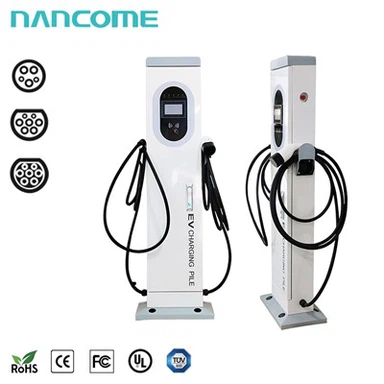
The Future Of High-Powered Fast Charging: Trends in EV Charging Piles
Oct 21, 2024
The evolution of the electric vehicle (EV) industry is driving significant advancements in EV charging technology, particularly in the realm of high-powered fast charging stations, commonly known as EV charging piles. As more consumers globally adopt electric vehicles, the demand for faster and more efficient charging solutions has become critical. This article explores the emerging trends in high-powered fast charging piles and what the future holds for this vital sector of the automotive industry.

Rising Demand for Faster Charging
The convenience of quickly topping up an EV's battery is a key consideration for potential buyers. Traditional EV chargers, which can take several hours to fully charge a vehicle, are becoming less appealing as electric vehicle adoption increases. Consumers are expressing a clear preference for charging solutions that closely mimic the speed and convenience of refueling at a gas station. This desire for efficiency has given rise to high-powered fast charging piles, which can deliver significant amounts of energy to an EV's battery in a fraction of the time traditional chargers would require.
High-powered chargers, offering 150 kW and above, with some models exceeding 350 kW, are transforming the landscape of public charging infrastructure. These rapid charging solutions can replenish an EV battery to 80% capacity in as little as 20 minutes for some models. The trend toward higher voltage support, often upwards of 800 volts, allows for reduced charging times without compromising on energy efficiency.
Technological Advancements Driving Growth
Several technological innovations are propelling the growth of high-powered fast charging piles. The development of more advanced charging connectors and improved energy management systems plays a crucial role. Next-generation EVs are now equipped with improved battery chemistries that can safely handle the higher power loads delivered by fast chargers. The advancement of silicon carbide (SiC) and gallium nitride (GaN) semiconductors is also essential, as they provide enhanced efficiency, reduced energy losses, and smaller, more cost-effective components.
Another area of technological growth is the integration of smart grid technology with EV charging networks. These intelligent systems enable dynamic load management and help balance demand on the power grid, particularly at peak times. By using data analytics and predictive algorithms, charging stations can optimize energy distribution and ensure a reliable supply even during high-demand periods.
Expanding Infrastructure and Accessibility
Governments and private companies around the world are investing heavily in expanding high-powered fast charging infrastructure. Public initiatives and subsidies are supporting the rollout of new charging stations along highways, in urban areas, and at key transit hubs. The goal is to alleviate range anxiety, which remains a significant barrier to widespread EV adoption.
Moreover, the trend towards interoperability is gaining traction. Interoperability involves the ability of different charging networks and stations to work seamlessly with various EV models, thus improving accessibility. Efforts are underway to standardize charging protocols, such as the Combined Charging System (CCS) and CHAdeMO, to ensure universal compatibility. This will enable users to access a broader network of charging stations without encountering compatibility issues, facilitating a more user-friendly experience.
Sustainability and Energy Efficiency
Sustainability is at the forefront of developments in the EV charging industry. The integration of renewable energy sources, such as solar and wind, into charging station infrastructure is becoming more common. Many charging piles now come equipped with solar canopies or are connected to local renewable energy grids. These measures help reduce the carbon footprint of EV charging stations and contribute to a more sustainable future.
In addition to renewable integration, energy efficiency measures are being implemented to enhance the environmental benefits of fast charging piles. Technologies such as energy storage systems and advanced cooling techniques ensure optimal operation, minimize waste, and mitigate environmental impact. In many cases, battery storage is used to store excess energy generated during off-peak times, which can then be deployed during high-demand periods.
Challenges and Future Prospects
Despite the rapid advancements, challenges remain in the widespread adoption of high-powered fast charging piles. Infrastructure deployment can be expensive, and electrical grid upgrades are often necessary to support the increased demand. Furthermore, the initial capital investment required can be substantial, especially in rural or less accessible areas.
Looking ahead, continued collaboration between governments, utilities, automakers, and technology providers will be crucial. Innovations in battery technology, improved charging protocols, and expanded renewable integration will play key roles in overcoming existing obstacles.
The development of high-powered fast charging piles presents a promising path for the future of electric mobility. As technology evolves, these charging stations will become an integral part of our transportation infrastructure, further accelerating the transition to a more sustainable and efficient automotive landscape.