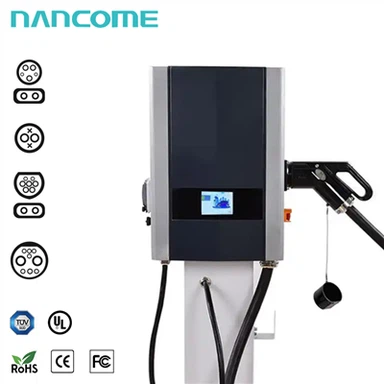
How fast can a DC charger charge an EV?
Dec 11, 2023

The charging speed of a Direct Current (DC) charger for electric vehicles (EVs) is contingent upon both the charging capacity of the charger itself and the battery capacity of the EV. Nevertheless, one undeniable advantage is that DC chargers can significantly outpace Level 1 or Level 2 Alternating Current (AC) chargers.
In broad terms, DC fast chargers boasting a charging capacity ranging from 50 to 350 kW have the capability to charge an EV from 0% to 80% capacity in a mere 20 to 30 minutes. This represents a substantial leap in efficiency compared to AC chargers, which necessitate several hours to attain a full charge.
The appeal of DC fast charging to EV drivers lies prominently in its convenience, offering a major time-saving advantage. This translates to reduced wait times for drivers during charging sessions and more time spent actively driving. Consequently, long-distance travel in an EV becomes significantly more viable, as drivers can swiftly replenish their battery levels at rest stops or dedicated charging stations.
Furthermore, the pace of DC charging continues to evolve with the introduction of newer, more rapid chargers. A noteworthy example is Tesla's Supercharger V3, reputedly capable of adding 75 miles of range to a Tesla Model 3 in just 5 minutes.
DC fast charging stands as a remarkable progression in EV technology, effectively facilitating practical long-distance travel. Drivers benefit from the expeditious and convenient charging of their vehicles, empowering them to explore new destinations without any lingering concerns about range limitations.