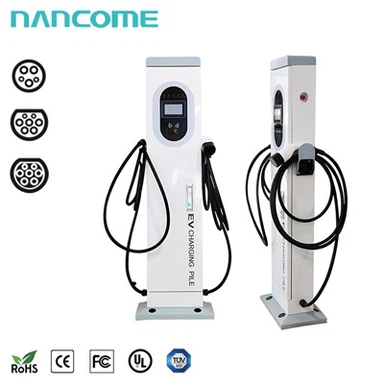
Benefits of Installing a Commercial DC EV Charging Station
Jul 24, 2026
As electric vehicles (EVs) become an essential part of modern transportation, businesses are increasingly recognizing the value of investing in Commercial DC EV Charging Stations. From retail centers and hotels to fleet depots and public charging networks, high-power charging infrastructure is no longer just an added service-it is becoming a strategic business asset.
A Commercial DC EV Charging Station offers much more than fast charging. It helps attract customers, increase property value, improve operational efficiency, and prepare businesses for the rapidly growing electric mobility market.
In this article, we'll explore the key benefits of installing a commercial DC EV charging station and why it has become a smart long-term investment.
Meet the Growing Demand for Fast EV Charging
Global EV adoption continues to increase year after year, creating strong demand for reliable charging infrastructure.
Unlike AC chargers, a Commercial DC EV Charging Station delivers direct current directly to the vehicle's battery, significantly reducing charging time. Depending on the charger's output power and the vehicle's charging capability, many EVs can recharge from 20% to 80% in approximately 20–40 minutes.
Fast charging enables businesses to serve more drivers each day while reducing waiting times, making it particularly valuable in busy commercial environments.
Evaluate Your Charging Station Capacity
Increase Customer Traffic and Dwell Time
Installing a DC fast charger can attract EV owners who actively search for convenient charging locations.
Businesses that benefit include:
- Shopping malls
- Supermarkets
- Hotels
- Restaurants
- Entertainment venues
- Office complexes
- Tourist attractions
While their vehicles charge, customers often spend time shopping, dining, or using other services. This increased dwell time can lead to higher sales and improved customer engagement.
For businesses competing for foot traffic, charging infrastructure can become a valuable differentiator.
Create a New Revenue Stream
A Commercial DC EV Charging Station can generate direct income through charging fees while supporting broader business growth.
Common revenue models include:
- Pay-per-kWh charging
- Time-based billing
- Session-based pricing
- Membership subscriptions
- Fleet charging agreements
In addition to charging revenue, businesses may see indirect financial benefits through increased customer spending and stronger brand loyalty.
Improve Charging Efficiency
DC charging stations are designed for rapid energy delivery, allowing operators to maximize equipment utilization.
For example:
| Charger Power | Typical Charging Time (20%–80%) |
|---|---|
| 60 kW | 45–70 minutes |
| 120 kW | 25–40 minutes |
| 180 kW | 20–30 minutes |
| 240 kW | 15–25 minutes |
Higher charging speeds enable more charging sessions per day, improving the return on investment for commercial charging facilities.
Support Fleet Operations

Commercial fleets depend on vehicle availability. Long charging times can reduce productivity and increase operating costs.
A Commercial DC EV Charging Station helps fleet operators by:
- Reducing vehicle downtime
- Increasing daily operating hours
- Supporting scheduled charging
- Improving fleet efficiency
- Simplifying charging management
Industries that benefit include:
- Logistics companies
- Delivery services
- Taxi operators
- Public transportation
- Car rental businesses
- Municipal vehicle fleets
Enhance Property Value
Modern commercial properties increasingly require EV charging infrastructure to meet tenant expectations and future market demands.
Installing DC charging stations can make a property more attractive to:
- Retail tenants
- Office tenants
- Hotel guests
- Property investors
- Commercial developers
As EV adoption grows, charging facilities are becoming an important competitive advantage in commercial real estate.
Strengthen Corporate Sustainability
Many organizations have established carbon reduction and sustainability goals.
Commercial EV charging supports these initiatives by encouraging the adoption of zero-emission transportation.
Benefits include:
- Supporting ESG objectives
- Reducing greenhouse gas emissions
- Demonstrating environmental responsibility
- Meeting government sustainability targets
- Enhancing corporate reputation
For many businesses, EV charging infrastructure aligns with broader environmental and social responsibility strategies.
Intelligent Charging Management
Modern commercial charging stations include advanced software features that simplify operation and maintenance.
Common capabilities include:
- OCPP 1.6J and OCPP 2.0.1 compatibility
- RFID authentication
- Mobile app control
- QR code payment
- Cloud-based monitoring
- Real-time diagnostics
- OTA firmware updates
- Dynamic load balancing
- Energy usage reporting
These intelligent functions help operators optimize energy consumption, reduce maintenance costs, and improve user experience.
Scalable for Future Growth
EV charging demand will continue to increase over the coming years.
Many Commercial DC EV Charging Stations use modular designs that allow businesses to:
- Increase charging power
- Add additional charging connectors
- Expand charging capacity
- Upgrade software remotely
- Integrate future technologies
Scalable systems protect long-term investments while reducing future upgrade costs.
Reliable Performance in Commercial Environments
Commercial charging stations must operate continuously under demanding conditions.
High-quality DC chargers typically feature:
- High-efficiency power modules
- Intelligent thermal management
- IP54/IP55/IP65 protection ratings
- Wide operating temperature ranges
- Surge protection
- Overcurrent protection
- Short-circuit protection
- Emergency stop systems
These features help ensure stable operation and minimize downtime.
Evaluate Your Charging Station Capacity
Compatible with Multiple EV Models
Commercial charging stations are designed to support a wide range of electric vehicles.
Common connector options include:
- CCS1
- CCS2
- GB/T DC
- CHAdeMO
- NACS (optional)
Multi-standard compatibility allows operators to serve more customers while maximizing charger utilization.
Prepare for Future Technologies
The EV charging industry continues to evolve rapidly.
Modern commercial charging stations can be integrated with technologies such as:
- Battery Energy Storage Systems (BESS)
- Solar power systems
- Vehicle-to-Grid (V2G)
- Smart energy management
- AI-powered charging optimization
- Dynamic power sharing
- Renewable energy integration
Selecting future-ready charging equipment helps businesses remain competitive as technology advances.
How to Maximize Return on Investment
To achieve the best long-term results, businesses should:
- Select the appropriate charging power based on traffic volume
- Install chargers in highly visible and accessible locations
- Choose OCPP-compatible equipment
- Monitor charging data and utilization
- Plan for future expansion
- Partner with experienced manufacturers that provide reliable technical support
A well-planned installation can reduce operating costs while improving customer satisfaction and equipment utilization.
Conclusion
Installing a Commercial DC EV Charging Station offers significant benefits for businesses across a wide range of industries. Beyond providing fast and reliable charging, these systems create new revenue opportunities, attract more customers, improve fleet efficiency, enhance property value, and support long-term sustainability goals.
As electric vehicle adoption continues to accelerate, investing in commercial DC charging infrastructure is becoming a strategic decision rather than simply an operational upgrade. By choosing scalable, intelligent, and high-quality charging solutions from an experienced manufacturer, businesses can build a future-ready charging network that delivers reliable performance, strong returns on investment, and lasting value in the evolving electric mobility market.